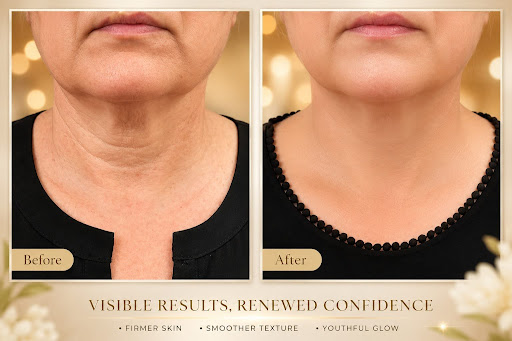
Halo is a hybrid fractional laser that corrects sun damage, fine lines, and uneven texture with about five to seven days of downtime, and Minnesota’s long indoor season makes fall through spring an ideal treatment window. Twin Cities patients should choose a medical provider experienced with the device and plan sessions around lake season.
Minnesotans have a complicated relationship with the sun. We spend half the year missing it and the other half absorbing as much of it as possible at the lake, on the golf course, or at a cabin up north. The skin keeps score of all of it. That is a big part of why Halo laser in Edina has become one of the most requested aesthetic treatments in the Twin Cities metro. It is built to undo exactly the kind of accumulated sun damage that Minnesota summers leave behind, on a recovery timeline that fits a working adult’s calendar.
Why Sun Damage Is a Twin Cities Problem
It surprises people to hear that northern climates produce serious photodamage, but the pattern is consistent. Minnesota summers are short and intense, and residents compress a year’s worth of outdoor time into a few months of boating, biking, gardening, and patio season, often with inconsistent sunscreen. Winter adds its own contribution, since fresh snow reflects a large share of UV radiation at the face during the months when people assume they are safe. Add wind exposure and indoor heating that dries the skin. By their forties, many Twin Cities residents carry visible sun spots, blotchy tone, and rough texture that no skincare routine fully resolves.
What Halo Actually Is
Halo is a hybrid fractional laser made by Sciton, and the hybrid part is the point. In a single pass, it delivers two wavelengths: an ablative 2940 nm wavelength that removes microscopic columns of damaged surface tissue, and a non-ablative 1470 nm wavelength that heats the deeper dermis to trigger months of collagen rebuilding. The combination corrects pigment, fine lines, enlarged pores, and texture at a level that used to require aggressive resurfacing, while keeping recovery to roughly five to seven days of redness and flaking. Because only a fraction of the skin is treated in each pass, the surrounding healthy tissue speeds healing.
Why Minnesota’s Calendar Works in Your Favor
Laser resurfacing has two scheduling rules: arrive without a tan and protect the new skin from the sun afterward. That makes the Upper Midwest’s long indoor season a genuine advantage. From October through April, most Twin Cities residents are pale, covered, and spending limited time outdoors, which is close to perfect for laser treatment. Patients who book in late fall or winter heal during the months when sun exposure is easiest to control, then walk into spring with clearer, smoother skin. Treating in July, between cabin weekends and ball tournaments, is workable but requires far more discipline.
What a Treatment Visit Looks Like
A typical appointment at an Edina or Minneapolis area clinic starts with numbing cream for thirty to sixty minutes, followed by thirty to forty-five minutes of laser time for a full face. Most patients describe waves of prickly heat rather than pain, with a sunburn-like warmth for the rest of the day. The first two days bring redness and mild swelling. Between days three and five, treated pigment darkens and flakes away, often described as a coffee ground texture, and by the end of the week, most people are back to normal routines with makeup. The early glow appears within that first week, while collagen-driven improvement keeps building for three to six months.
Choosing a Provider in the Edina and Minneapolis Area
The metro has no shortage of medspas, and quality varies more than most patients realize. Halo is a powerful, adjustable device, and outcomes track provider experience closely. Look for a clinic where treatments are performed under physician oversight, ask how many Halo treatments the practice performs in a typical month, and request before and after photos of their own patients rather than manufacturer stock images. A reputable provider offering Halo laser treatment near Minneapolis will begin with a full skin assessment, often including photography that reveals pigment below the surface, and will be honest about whether one session or two will reach your goal.
What Results to Expect
Most patients see meaningful change from a single treatment: brighter tone, faded sun spots, tighter-looking pores, and smoother texture. More serious damage, heavy freckling across the cheeks, or etched lines may call for a second session a few months later, and many providers design a plan that pairs Halo with lighter maintenance treatments in the following years. Results photos taken at three months routinely look better than those taken at three weeks, because the collagen response is still maturing. Skin that took decades of Minnesota summers to damage will not reset in an afternoon, but one well-delivered treatment moves it dramatically in the right direction.
Protecting the Investment Through a Minnesota Summer
Aftercare in this climate is its own skill. Fresh post-laser skin pigments easily, so daily broad-spectrum sunscreen is non-negotiable, including on cloudy days and during winter months when snow glare is doing quite damage. Hats and sunglasses on the boat, reapplication at the cabin, and a touch of common sense through July and August preserve results that would otherwise erode by Labor Day. Patients who hold the line on sun protection routinely keep their results looking fresh for years, with only light maintenance.
The Bottom Line
For Twin Cities residents whose skin shows the cost of two or three decades of lake summers, hybrid fractional resurfacing is one of the most efficient corrections available, and the local climate calendar makes it unusually easy to schedule well. A consultation for Halo laser near Minneapolis is the practical first step: a skin assessment, an honest conversation about goals and downtime, and a treatment plan timed so you heal indoors and enjoy the results all summer.