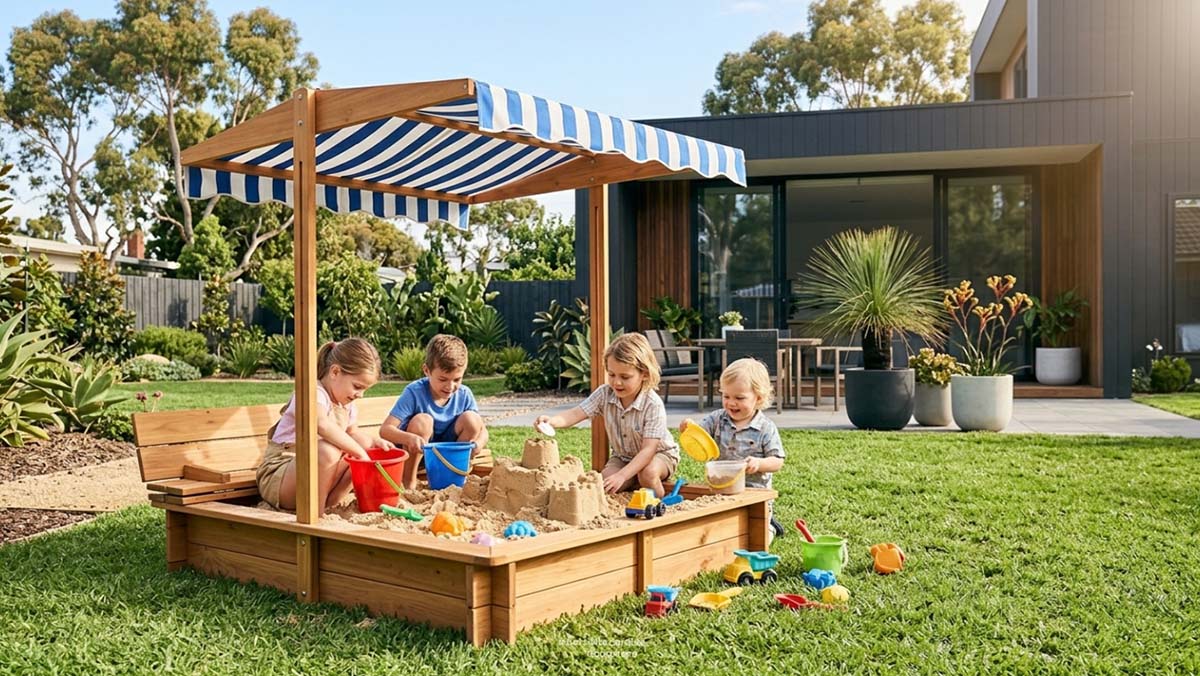
There’s something about a sandpit that never gets old. You hand a kid some sand and buckets, and it will keep them busy for hours – mixing, building, digging, pouring, and everything over.
It’s one of those rare outdoor setups that works for toddlers and older kids alike. But not every sandpit is worth buying, and the wrong choice can mean poor durability, safety issues, or a purchase you regret by the second summer. Here’s what to actually look for before you commit.
Factors to Consider When Buying a Sandpit for Your Child
Sandpits can bring a lot of joy to little ones because they create a unique experience for them. So choosing the best one is absolutely essential for your child. Lets discuss some factors so you can buy the right sandpit.
Measure Your Space
The first thing that you need to do before you buy sandpit online is check and measure the area of its placement. This is important because it will directly impact the size and model you will go for. Also, make sure to leave some extra space around it and keep it in a shaded area to ensure that the sand is cool every time your kids play.
Material
The material of all kids’ play equipment is crucial to notice because it can affect the life span, maintenance and other key features. Sandpits come in wooden and plastic materials. Even though plastic ones are lightweight, they are still prone to damage due to sun exposure. A wooden sandpit with lid is great because it can easily resist damage and last much longer while also looking better.
Maintenance
Maintenance is an important point to consider when buying outdoor play equipment in Australia. Choose a product that is easy to clean and can also be covered for extra protection during bad weather and even on regular days. This will also help in ensuring that no contamination is happening, keeping your children safe.
Cover and Canopy Options
A sandpit with a lid provides only basic protection. It keeps the sand clean when your kids are not using it, prevents animals from treating it like a litter box and stops rainwater from pooling inside that would turn the whole thing into muddy slop.
A sandpit with a canopy generates shade but also allows the children to be actually play, which is what they do in Australia, and its really significant. Direct sunlight hitting unanchored sand in the summer can make that surface way too hot on kids and also increases their exposure to UV rays since they are sod only at kid height.
Size and Age Appropriateness While Choosing a Sandpit
It is not merely finding the right size to fill space. It is also about the age and crowd of children who would be using it, hence matching these two.
A smaller, wider sandpit is more appropriate for children from the age of one to three. They don’t require the room, a small form factor keeps them within an arm’s reach if you’re supervising. A bigger pit allows slightly older (four and up) kids to have enough space that they can build with their friends without stepping on each other’s toes every five seconds.
Here is a guide to give you a quick idea:
- Small sandpits (under 1m²): Suited for one to two toddlers, compact yards, or balcony setups
- Medium sandpits (1–2m²): Good for families with two or three kids, fits most standard backyards comfortably
- Large sandpits (2m² and above): Ideal for older children, groups, or families who want the sandpit to serve as a centrepiece of the outdoor space
If you’re buying for kids at different ages, err toward the larger size. They’ll grow into it fast.
Safety Features to Look For in a Sandpit
Safety isn’t a box-ticking exercise here. It’s the difference between a sandpit that works well for years and one that causes problems.
When reviewing any model, check for:
- Smooth, splinter-free edges – especially on timber models. Children lean on the sides constantly while playing
- Non-toxic materials and finishes – the paint, stain, or treatment used on the wood should be explicitly safe for children
- Stable construction – the sandpit shouldn’t rock or shift when kids lean over the sides or sit on the edge
- Compliance with Australian safety standards – look for products tested to AS/NZS 8124, which is the benchmark for children’s play equipment in Australia
- Appropriate sand depth – most sandpits work well with 15–20cm of sand. Too shallow and it’s frustrating to play in; too deep and very young children can struggle
The last thing to keep in mind is the type of sand. Use play sand, or dust-free sand which is only defective via the manner of approach. Garden or construction sand accumulates stones which is not good for kids’ play.
Final Word
A good sandpit is one of the better outdoor investments you can make for a young A good sandpit is one of the better outdoor investments you can make for a toddler. There’s a lot of play in it, it’s not too complicated to get set up and the right model will last for years with little upkeep. The trick is to finalize the essentials long before you purchase, measure up your location, source hard-wearing materials, and invest in a good-quality cover canopy. Also, whatever option you choose needs to meet Australian safety standards.