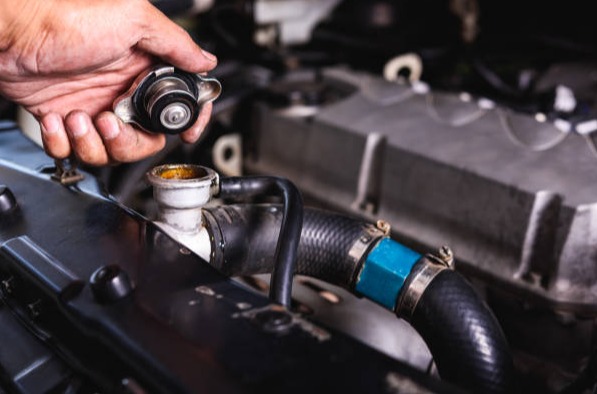
A faulty radiator can’t remove heat from your engine properly, which leads to overheating, power loss, and expensive engine damage. Even a partly clogged radiator can affect how your car drives long before the temperature gauge hits red.
Las Vegas is one of the toughest places in the country for a cooling system. Summer highs regularly top 110°F, which narrows the temperature gap the radiator relies on to shed heat. Stop-and-go traffic on the Strip and I-15 reduces airflow through the radiator.
The local tap water is also very hard, so topping off with it can leave mineral scale inside the radiator tubes. Long desert climbs on I-15 toward California add extra load, especially when towing. If your engine runs hotter than usual, coolant levels keep dropping, or you notice signs of a leak, timely radiator repair in Las Vegas can help prevent expensive engine damage.
This article explores the key ways a faulty radiator can affect your car’s performance.
How Radiator Problems Hurt Performance
A weak radiator affects acceleration, fuel use, and other systems.
Overheating and Power Loss
When coolant runs too hot, the engine computer often pulls back ignition timing to prevent knock, which cuts power. Some newer cars go into a reduced-power mode to protect the engine. Continued overheating can warp the cylinder head or blow the head gasket.
Lower Fuel Economy
An engine running outside its normal temperature range burns fuel less efficiently. Timing changes also raise fuel use.
Transmission and A/C Strain
Many automatic cars cool transmission fluid through a cooler built into the radiator tank. If that cooler fails internally, coolant and fluid can mix and ruin the transmission. Some vehicles also shut off the A/C compressor when engine temperature climbs too high.
What Causes a Radiator to Fail
Old coolant loses its corrosion protection, allowing rust and scale to block the narrow tubes inside the radiator. Plastic end tanks become brittle from years of heat cycles and can crack along the seams.
Bent fins, bugs, and dust restrict airflow. A weak radiator cap can also lower system pressure, which drops the coolant’s boiling point.
Early Signs of a Failing Radiator
Watch for these early symptoms:
- Temperature gauge rising in traffic but dropping at highway speed
- Green, orange, or pink puddles under the front of the car
- A sweet smell after driving
- Coolant level dropping between top-offs
- Sludge or rust-colored coolant in the overflow tank
Repair, Flush, or Replace
A coolant flush works when the radiator is only lightly dirty, while small external leaks can sometimes be sealed. Cracked plastic tanks or heavily clogged cores usually mean full replacement, which is often cheaper than repair on modern cars. DIY replacement is possible on many older cars, but trapped air after refilling can cause overheating.
OEM radiators match factory fit, while quality aftermarket units cost less but can vary in core thickness. Keep in mind your next radiator repair in Las Vegas should include a new cap and a hose inspection, since both age alongside the radiator.
What to Do When the Temperature Gauge Climbs
Quick action can prevent serious engine damage:
- Turn off the A/C and switch the heater to full hot to pull heat from the engine.
- Pull over safely and shut the engine off if the gauge keeps rising.
- Wait at least 30 minutes before opening the radiator cap, since hot coolant is under pressure.
Key Takeaways
- A clogged or leaking radiator can reduce engine power, fuel economy, and A/C performance.
- Ignoring overheating can warp the cylinder head or blow the head gasket.
- Cracked plastic end tanks or badly clogged cores usually mean full radiator replacement.
- Top off with premixed coolant instead of hard tap water to prevent mineral scale.
- Never open a hot radiator cap, because pressurized coolant can cause serious burns.