Introduction
Modern land management is no longer just about clearing space quickly. It is now equally focused on sustainability, environmental protection, and long term soil health. Property owners, developers, and land managers are increasingly searching for solutions that balance efficiency with ecological responsibility. One of the most effective methods that meets these demands is forestry mulching.
This advanced land clearing technique transforms unwanted vegetation into useful organic material while improving the condition of the soil. Instead of removing trees, brush, and debris and transporting them away, forestry mulching processes everything on-site and returns it to the ground as nutrient-rich mulch. This approach reduces waste, saves time, lowers costs, and supports healthier ecosystems.
Understanding how forestry mulching works and why it has become so important in modern land management helps property owners make smarter and more sustainable decisions.
Understanding Eco Friendly Land Management
Eco friendly land management focuses on maintaining a balance between human development and environmental preservation. It aims to use land in a way that does not destroy natural ecosystems but instead supports regeneration and long term sustainability.
Traditional land clearing methods often disturb soil layers, remove valuable organic matter, and generate large amounts of waste that must be transported or burned. These methods can lead to erosion, habitat destruction, and long term soil degradation.
Forestry mulching, on the other hand, supports eco friendly land management by reducing disturbance and recycling vegetation naturally. Instead of treating cleared material as waste, it converts it into a resource that benefits the land itself. This makes it a highly sustainable option for modern land development and maintenance projects.
How Forestry Mulching Works
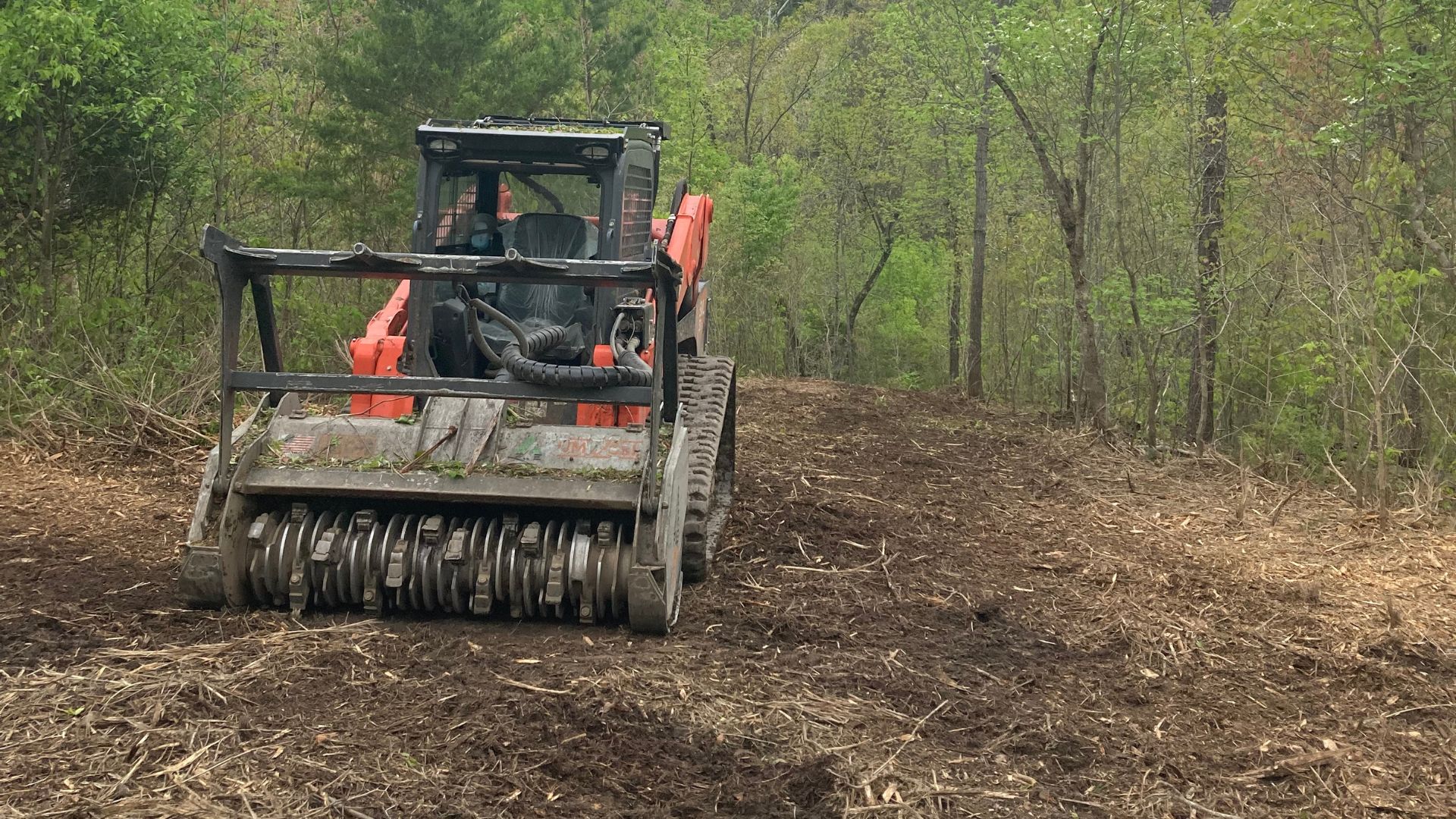
Forestry mulching is performed using specialized heavy machinery equipped with a rotating drum or cutting head. This equipment is designed to grind trees, brush, and dense vegetation directly where they stand.
The process begins as the machine moves across the land, cutting and shredding all unwanted vegetation. Instead of collecting and transporting debris, everything is processed on-site into fine mulch. This mulch is then evenly distributed across the ground surface.
This single-step process eliminates the need for multiple machines and labor-intensive cleanup. It also reduces soil disruption because there is no digging, dragging, or large-scale removal of root systems unless necessary.
The end result is a cleared, leveled, and environmentally enriched surface that is ready for future use.
Key Benefits of Forestry Mulching
One of the biggest advantages of forestry mulching is its environmental friendliness. By converting vegetation into mulch instead of removing it, the process naturally recycles organic material back into the soil. This improves soil fertility and promotes healthier plant growth over time.
Another major benefit is cost efficiency. Traditional clearing methods often require multiple steps such as cutting, hauling, and disposal. Each step adds labor, equipment, and transportation costs. Forestry mulching combines everything into one operation, significantly reducing overall expenses.
Time efficiency is also a major advantage. Since the process is completed in a single step, large areas of land can be cleared much faster compared to traditional methods.
In addition, forestry mulching helps control soil erosion. The mulch layer left behind acts as a protective cover that shields soil from heavy rain and wind, reducing the risk of erosion and land degradation.
It also supports wildlife by preserving portions of natural habitats instead of completely destroying them, allowing ecosystems to recover more easily.
Applications of Forestry Mulching in Land Management
Forestry mulching is widely used across different types of land management projects due to its versatility and efficiency.
It is commonly used for clearing overgrown properties that have been neglected for years. Dense vegetation, shrubs, and small trees can be quickly removed without damaging the soil structure.
It is also used for maintaining access roads, trails, and utility corridors. By controlling vegetation growth along these areas, visibility and accessibility are improved while preventing overgrowth from becoming a hazard.
Agricultural land preparation is another important application. Farmers use forestry mulching to clear unwanted brush and prepare fields for planting without disrupting soil fertility.
In large infrastructure projects, forestry mulching is used to clear right-of-way areas for pipelines, power lines, and construction zones. Its speed and low environmental impact make it highly suitable for these large-scale operations.
Environmental Advantages of Forestry Mulching
The environmental benefits of forestry mulching are one of the main reasons it has become so widely adopted in modern land management.
One of the most important advantages is waste reduction. Instead of generating large piles of debris that require disposal, all vegetation is recycled directly into the ground. This reduces landfill usage and eliminates burning practices that can harm air quality.
The mulch layer created during the process improves soil health by retaining moisture and slowly releasing nutrients as it decomposes. This creates a natural fertilization system that supports plant regrowth.
Forestry mulching also reduces the need for chemical herbicides because vegetation is physically managed instead of chemically controlled. This helps protect surrounding ecosystems and water sources from contamination.
Additionally, it minimizes soil disturbance, preserving natural land structure and preventing long term degradation.
Comparison with Traditional Land Clearing Methods
Traditional land clearing methods typically involve multiple stages including cutting, bulldozing, hauling, and disposal. These steps require significant time, labor, and heavy machinery, making them more expensive and disruptive.
These methods also leave soil exposed, increasing the risk of erosion and reducing long term land quality. In contrast, forestry mulching protects the soil by leaving a layer of organic material behind.
Another major difference is environmental impact. Traditional clearing often destroys entire ecosystems, while forestry mulching allows partial preservation of natural habitats.
From a cost perspective, forestry mulching is more efficient because it eliminates transportation and disposal expenses. It also reduces equipment requirements, making it a more streamlined solution.
Long Term Benefits of Forestry Mulching
The benefits of forestry mulching extend well beyond the initial clearing process. Over time, the mulch decomposes and enriches the soil with organic matter, improving its structure and fertility.
This ongoing natural process supports healthier plant growth and reduces the need for artificial fertilizers. It also helps maintain moisture levels in the soil, making land more resilient to drought conditions.
Regular use of forestry mulching for maintenance prevents excessive regrowth of unwanted vegetation, reducing the need for large-scale clearing projects in the future.
Overall, it creates a more sustainable and self-sufficient land management system.
When Forestry Mulching Is the Best Choice
Forestry mulching is ideal for a wide range of situations. It is especially useful for properties that have become heavily overgrown and require fast restoration.
It is also the preferred method when environmental preservation is a priority. Since it minimizes soil disruption and supports natural regeneration, it is suitable for sensitive ecosystems.
Land preparation for construction, agriculture, or landscaping also benefits greatly from this method due to its efficiency and cost-effectiveness.
For large properties that require ongoing maintenance, forestry mulching provides a practical long-term solution.
Maintenance and Sustainability Considerations
Although forestry mulching is highly effective, long-term success depends on proper land maintenance. Regular monitoring of vegetation growth ensures that the land remains controlled and usable.
Periodic mulching can help prevent overgrowth and maintain the balance between cleared areas and natural vegetation. This reduces the need for intensive clearing in the future.
Sustainable practices such as preserving beneficial trees and maintaining natural drainage patterns also enhance the long-term effectiveness of forestry mulching.
Frequently Asked Questions
What is forestry mulching used for?
Forestry mulching is used to clear vegetation, manage overgrown land, prepare construction sites, and maintain trails while improving soil health.
Is forestry mulching environmentally friendly?
Yes, it is highly eco friendly because it recycles vegetation into mulch, reduces waste, and minimizes soil disturbance.
How is forestry mulching different from traditional clearing?
Unlike traditional methods that remove and transport debris, forestry mulching grinds vegetation on-site and leaves it as natural mulch.
Does forestry mulching improve soil quality?
Yes, the mulch decomposes over time and adds nutrients back into the soil, improving fertility and structure.
When should forestry mulching be used?
It is best used for overgrown properties, land development projects, agricultural preparation, and eco sensitive areas.
Conclusion
Modern land management requires solutions that are efficient, sustainable, and environmentally responsible. Forestry mulching provides all of these benefits by combining vegetation clearing, waste reduction, and soil improvement into a single streamlined process.
Its ability to reduce costs, protect ecosystems, and improve soil health makes it one of the most valuable techniques in today’s land development and maintenance practices. Whether used for residential, agricultural, or commercial projects, forestry mulching offers a practical and long term solution for managing land in a smarter and more sustainable way.