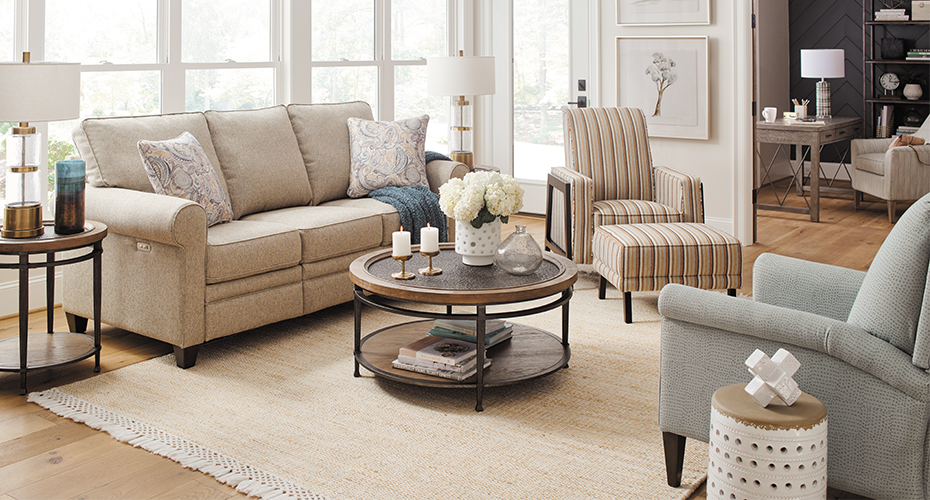
Walking into a massive showroom can feel a bit like stepping onto a movie set. Everything looks perfect under those high-end stage lights, the pillows are perfectly chopped, and the air smells like high-quality leather and cedar. But here is the thing: you aren’t buying a movie set. You’re buying the place where you’ll collapse after a ten-hour workday, where your kids will inevitably spill juice, and where you’ll host Thanksgiving dinner.
Buying furniture is one of the few times we spend thousands of dollars on something we can’t fully “test drive” for months. Because of that, most people shop with their eyes first and their brains second. They see a sectional that looks like a cloud and forget to check if it can actually fit through their front door or if the fabric will survive a cat with a grudge.
Smart shopping isn’t about finding the lowest price tag; it’s about knowing which questions to bark at the sales floor before you swipe your card. If you are browsing a furniture store in Henderson, you need to look past the staging and start poking at the joinery.
The “Bones” of the Build: What’s Under the Fabric?
The biggest mistake I see people make is falling in love with a velvet finish or a trendy color without asking what’s holding the whole thing together. A sofa can look like a million bucks and still be made of particle board and staples.
Ask About the Frame Material
You want to hear words like “kiln-dried hardwood.” Why? Because wood that hasn’t been kiln-dried still has moisture in it. Over time, that moisture evaporates, the wood warps, and suddenly your expensive sofa has a mysterious squeak every time you sit down. If the salesperson says “engineered wood,” that’s usually a fancy term for plywood or MDF. While high-quality plywood is okay for some pieces, for a main sofa, you want the heavy stuff.
The Joint Venture
Ask how the pieces are joined. If the answer is “staples and glue,” walk away. You’re looking for:
- Mortise and tenon
- Dovetails
- Double-doweled joints
- Corner blocks screwed into place
These are the marks of furniture that will last a decade rather than a season. It’s the difference between a “five-year sofa” and a “forever sofa.”
The Comfort Test: It’s Not Just About Softness
We’ve all done it sat down on a showroom chair, sighed because it felt like a marshmallow, and thought, “This is the one.” Six months later, that marshmallow has turned into a flat pancake.
When you’re at a major retailer like RC Willey, you have the advantage of seeing a massive variety of cushion types. Don’t just sit; investigate. Ask what the “density” of the foam is. A high-density foam (usually 1.8 or higher) will keep its shape much longer than the cheap stuff.
If you want that ultra-plush feel, ask if the cushions are “down-wrapped.” This gives you the immediate softness of feathers on the outside but keeps a solid foam core in the middle so you don’t sink all the way to the wooden slats.
Measuring for the “Real World”
Here is a quick story. I once helped a friend pick out a stunning oversized mahogany dining table. It was the centerpiece of her dreams. We measured the dining room twice. It fit perfectly. What we didn’t measure was the tight 90-degree turn in her hallway leading from the front door. We spent three hours trying to maneuver that beast like a game of Tetris before we finally gave up and had to send it back. It was embarrassing, frustrating, and expensive.
The Three Measurements You Actually Need
- The Piece: Length, width, and height (obviously).
- The Path: Measure your door frames, the width of your hallways, and any low-hanging light fixtures.
- The Pitch: If you’re buying a recliner, how much space does it need behind it to actually lean back? Most people forget that a chair takes up 30% more space when it’s actually being used.
Understanding Fabric Ratings and “Double Rubs”
If you have dogs, kids, or a hobby that involves red wine, the fabric is your first line of defense. But “durable” is a relative term.
Ask the salesperson about the “double rub count.” This is a literal mechanical test where a machine rubs a piece of fabric back and forth until it breaks. For a home sofa, you want something at least 15,000 double rubs. If you want something that can handle a pack of golden retrievers, look for “heavy-duty” ratings of 30,000 or more.
Natural vs. Synthetic
- Polyester blends: These are the workhorses. They resist stains, don’t fade in the Nevada sun as quickly, and are usually cheaper.
- Leathers: Top-grain is the gold standard. Avoid “bonded leather” at all costs—it’s essentially the chicken nugget of the furniture world (scraps glued together) and will peel within two years.
- Velvets: They look amazing but can be “piling” nightmares if they aren’t high-quality synthetic.
Delivery, Warranties, and the “Fine Print”
You’ve found the piece. You love the price. Now comes the part where most people tune out. Don’t.
The Delivery Logistics
Ask if they offer “White Glove Delivery.” Some places just drop a box on your porch. Others will bring it in, assemble it, and most importantly take the mountain of cardboard and plastic wrap with them. In the heat of a Henderson summer, you do not want to be stuck in your garage breaking down boxes for three hours.
The Warranty Trap
Be careful with “accidental damage” plans. Read what they actually cover. Does it cover a rip from a dog claw? Does it cover a grape juice stain? More importantly, ask how you actually file a claim. If you have to jump through ten hoops and mail a physical letter to a third party, the warranty is probably worthless.
Why You Should Shop with a “Checklist” Mentality
It’s easy to get overwhelmed by the sheer volume of choices. To keep your head on straight, keep these three priorities in mind:
- Function over Fashion: If it’s beautiful but hurts your back after twenty minutes, you’ll grow to hate it.
- Scale over Style: A huge sectional in a tiny room makes the house feel like a closet. A tiny rug in a big room looks like a postage stamp.
- Quality over Quantity: It is almost always better to buy one really good piece of furniture a year than to furnish an entire house with “disposable” items that will end up in a landfill by 2029.
Final Thoughts for the Savvy Shopper
At the end of the day, a furniture store is a place of business, but your home is a sanctuary. The salespeople are there to help, but they aren’t the ones who have to live with the purchase. Be the “annoying” customer. Sit on the arms of the chairs to see if they wobble. Flip the cushions over to check the stitching. Pull the drawers all the way out to see if they’re on metal glides or just sliding on wood.
Investing in your home isn’t just about filling floor space; it’s about buying comfort and peace of mind. When you ask the right questions, you stop being a target for a sales commission and start being an informed curator of your own space.
Take your measurements, bring your fabric swatches, and don’t be afraid to walk away if the “bones” of a piece don’t match the beauty of the cover. Your future, well-rested self will thank you.
Would you like me to help you draft a specific checklist of questions to print out before your next shopping trip?