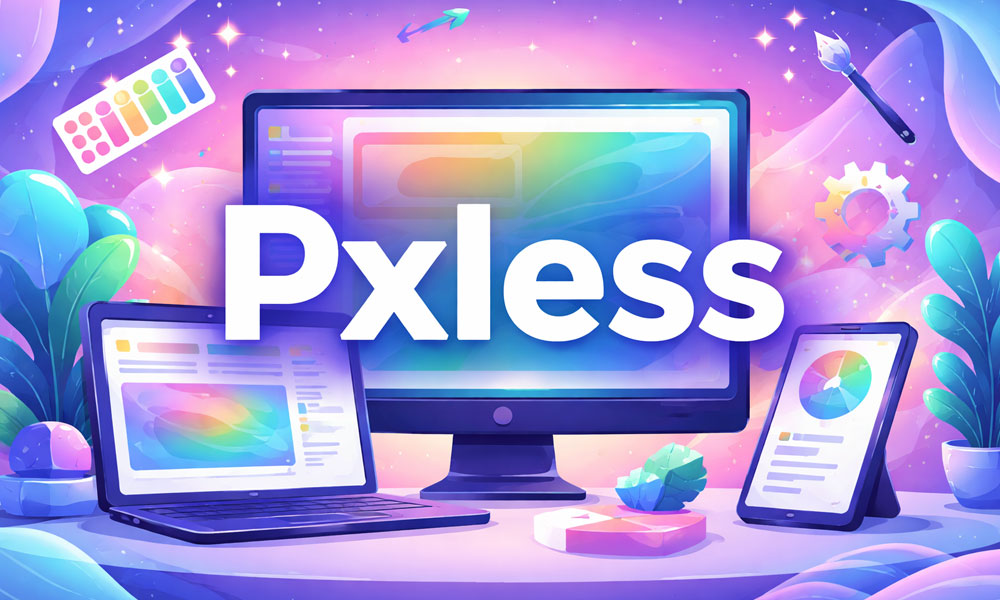
Have you ever opened a website on your phone and thought, “Why does this look so strange?” Maybe the text felt too small. Maybe the buttons were too big. Or maybe the whole page looked broken. This happens because many old design styles were made for only one screen size. Today, we use phones, tablets, laptops, foldable screens, and even VR devices. Designs must work everywhere. That is why people in 2026 are talking so much about Pxless.
Pxless is a modern and smart design idea that makes layouts adjust naturally to different screens. It helps designers create pages that look clean, smooth, and easy to use on any device. In this simple guide, we will explore what Pxless means, why it matters, and how beginners can understand it without stress or confusion.
By the end of this article, you will feel more comfortable with Pxless. You will see how it works, why people love it, and how you can use it to create designs that feel modern and future-ready. Let’s start with the basics.
What Pxless Means in Simple Words
Pxless may sound like a big, technical word, but the idea behind it is very simple. For many years, designers created layouts using fixed pixel sizes. For example, a designer might make a button exactly 250 pixels wide. This looks fine on one screen. But on another screen, the button may look too big or too tiny. That is the problem with fixed pixels.
Pxless means using fewer fixed pixels and more flexible units that can grow or shrink based on the device. Think of Pxless like water. Water fits into any cup, bottle, bowl, or shape. Pxless works the same way. It lets your design adjust to whatever screen the user has. The layout becomes smart, simple, and smooth.
For beginners, Pxless is easier to understand when you imagine real life. If you write your schedule on paper, it fits only that paper. But if you write your schedule in a cloud app, you can view it on any device, and it always fits. Pxless works like that. It gives your design a natural, flexible feel.
Why Pxless Design Is Becoming So Popular
In 2026, we use more screens than ever before. Phones now come in many shapes and sizes. People use smart watches. Folding phones are more common. Even cars have big screens now. Because of all this, old pixel-based design no longer works well. Designers need something flexible. That is why Pxless is rising fast.
Users also expect better experiences today. No one likes zooming in and out on a messy page. People want clean layouts, readable text, and buttons that are easy to tap. Pxless helps designers create this kind of experience without stress. It lets layouts adjust smoothly so the user never feels lost or annoyed.
Another reason Pxless is popular is that businesses now care more about performance. Websites must load fast. Apps must feel light and smooth. Pxless supports these goals because flexible units often reduce extra code. This makes apps faster and easier to maintain. For many companies, this is a big win.
How Pxless Design Works Behind the Scenes
Pxless may feel magical when you see it, but the idea behind it is very simple. Instead of telling a layout to be a fixed size, Pxless lets the layout decide its size based on the screen. It uses smart units like %, rem, em, vw, and vh. These units act like rules instead of fixed numbers.
For example, instead of making an image “200px wide,” Pxless may say “make the image 50% of the screen width.” This lets the image change size when the screen changes. The design stays clean and clear everywhere. It feels natural to the user because nothing looks stretched or squeezed.
Modern tools support Pxless very well. Web browsers today are smarter. Layout engines can understand flexible units easily. Design tools like Figma use auto-layout to help designers test Pxless behavior. Even new frameworks like Tailwind CSS and Bootstrap are built around flexible ideas. This makes Pxless easier than ever for beginners.
Key Principles of Pxless Design
Pxless design is based on a few simple principles. The first one is fluidity. Fluidity means everything in your layout can move, grow, or shrink naturally. Nothing is locked in place with strict pixel sizes. This gives your design a calm and smooth look.
The second principle is scalability. This means your text, buttons, and images can scale up or down without losing their beauty or readability. For example, a user may zoom in, and the layout should still look clean. Pxless makes this possible because it uses relative units that respond gently to changes.
Another key idea is smart spacing. Pxless encourages spacing that adjusts on its own. This keeps layouts neat and balanced. Finally, Pxless supports accessibility. It allows users with weak eyesight or older users to change text size without breaking the page. A Pxless design respects every user, which is very important today.
Pxless vs Pixel-Based Design: The Clear Difference
Traditional pixel-based design feels like drawing on graph paper. Everything is placed in exact boxes. This is great for one screen, but the moment the screen changes, the boxes break. The layout may look wrong, or important parts may hide or overlap. This frustrates both designers and users.
Pxless is very different. It works like a flexible puzzle where each piece can change shape but still fit together. The layout does not depend on exact pixel numbers. Instead, it depends on relationships. For example, a button may always be half the width of a container. A title may always be twice the size of body text. These relationships stay the same across screens.
Pixel-based design offers high control but low flexibility. Pxless offers high flexibility with natural control. Many designers today use a mix. They use pixels for very specific parts, but for most areas, they use Pxless ideas to keep the layout healthy and adaptive.
Read next: SEO by Highsoftware99.com: The Fastest Way to Get Seen on Google?
How to Start Using Pxless (Beginner Steps)
If you are new to Pxless, the first step is to change how you think about size. Instead of asking, “How many pixels is this?” ask, “How should this behave on different screens?” This small mindset shift makes everything easier. Start by replacing pixel units with flexible units like %, rem, or vw.
Next, practice building simple layouts. Try making a box that fills half the screen. Try making text that grows with the screen size. These small exercises help you understand Pxless naturally. You do not need to be perfect. The key is to explore and notice how elements move and respond.
Beginners often make one common mistake: mixing too many unit types at the same time. Keep it simple. Use one or two flexible units for your first few layouts. As you grow confident, you can explore more advanced techniques. Pxless is not about being perfect. It is about creating designs that feel natural and easy for users.
Tools That Make Pxless Design Easy
Pxless becomes even easier when you use the right tools. CSS gives you flexible units like %, rem, and vw that make layouts adapt. Flexbox and Grid help you build smart layouts where elements move in clean lines and rows without breaking. These tools work beautifully with Pxless principles.
Design tools like Figma also support Pxless ideas through auto-layout. Auto-layout lets you see how your design stretches and shifts. It removes the fear of broken layouts. You can test how your screen looks on a phone, tablet, or laptop with one click. This helps beginners learn faster.
Frameworks like Tailwind CSS and Bootstrap come with built-in responsive classes. This means you can create Pxless-style layouts with very little code. These frameworks guide you to use flexible units instead of fixed pixels. This is why many new designers in 2026 start learning Pxless through these tools.
How Pxless Helps With Accessibility
One of the best things about Pxless is how kind it is to users who need extra help. Not everyone has perfect eyesight. Some people need larger text. Some need more space between lines. With old pixel-based design, the moment a user zoomed in, the whole screen would break. Words would jump around. Buttons would move. Everything felt messy. Pxless solves this problem in a clean and natural way.
Because Pxless uses flexible units, the layout adjusts gently when the user changes size settings. Text grows without pushing things out of place. Buttons stay reachable. Images scale without becoming blurry or awkward. This makes a big difference for older users or anyone with vision problems. They finally feel included instead of frustrated.
Accessibility is not only a good practice—it is a requirement in many countries today. Designers in 2026 must think about all users, not just those with perfect eyesight. Pxless makes this easier because it respects user choices. It helps you create pages that stay readable, comfortable, and friendly for everyone.
Where Pxless Works Best in the Real World
Pxless is not just a design idea. It is something you can use every day in real projects. It works beautifully on websites, because websites must support many screen types. For example, a news website might have thousands of readers using phones, tablets, laptops, and even smart TVs. Pxless makes sure the layout looks good on all these screens without extra work.
Pxless also shines in mobile apps. App screens are small, so the layout must be simple and flexible. When you use Pxless, buttons and text adjust based on the device. This helps apps feel smooth and friendly. E-commerce stores, in particular, benefit a lot. When product images and text scale gracefully, users enjoy browsing and shopping more.
SaaS dashboards and business tools also use Pxless to stay clean and easy to understand. And as new devices like foldable phones and AR/VR headsets become common in 2026, Pxless becomes even more important. These devices do not follow old screen rules. Pxless makes it possible to create designs that adapt to whatever comes next.
Read next: Pravi Celer: A Friendly Guide to Its Taste, Uses, and Nutrition
The Big Benefits of Using Pxless Today
Pxless gives designers and developers many powerful advantages. The first big benefit is cross-device comfort. A Pxless layout feels natural on every screen. Nothing looks broken. Nothing feels too small or too large. This makes users trust your product more, because the design feels polished and modern.
Another benefit is faster development. When you use Pxless, you do not need to create separate versions of a layout for each device. One flexible design can fit everywhere. This saves time, money, and stress. Teams can update things faster because they aren’t tied to strict pixel rules. This makes Pxless great for startups and big companies.
Pxless also helps with SEO. Search engines prefer websites that work smoothly on all screens, especially phones. Google’s mobile-first rules reward clean, flexible layouts. A Pxless website loads faster and stays stable, which helps it rank higher. On top of that, Pxless makes your design future-proof. As new screens appear, your layout can adjust without needing a full rebuild.
Common Challenges When Moving to Pxless
Even though Pxless is simple, moving from pixel-based design can feel strange at first. Many designers are used to exact numbers. They want every box to sit in a perfect place. When they switch to Pxless, they may feel like they are losing control. This is normal. But with practice, they learn that Pxless creates a different kind of control—one that is fluid and smart.
Stakeholders can also be a challenge. Some clients want their design to look exactly like the mockup, pixel by pixel. They might not understand that Pxless changes shape depending on the device. For beginners, this can feel stressful. The best way to handle it is to show examples. When clients see how much better Pxless responds, they usually understand.
There are also technical challenges. Tools like Figma are great, but they do not show true responsiveness unless you test different screens manually. And Pxless requires more testing because every screen is different. But these challenges are small compared to the long-term benefits. Once a team gets used to Pxless, their work becomes cleaner, easier, and more modern.
The Future of Pxless and Smart Digital Design
It is clear that Pxless is not a short-term trend. It is part of a much bigger shift in digital design. In 2026 and beyond, new screens will continue to appear. Foldable phones will grow. AR glasses will improve. VR headsets will be more common. Pixel-based design cannot keep up with these fast changes, but Pxless can.
AI will also play a big role in the future of Pxless. Smart design tools will adjust layouts automatically. They may help you decide the best unit for each element. They might test dozens of screen sizes for you. Pxless works beautifully with this future because it is built on simple, flexible rules that AI can understand.
Design systems will also evolve. Many companies already use design tokens to make layouts consistent. Pxless fits perfectly into these systems because it focuses on relationships and scaling, not strict pixels. The future belongs to designs that adapt, adjust, and stay open to change. Pxless is the heart of that future.
Conclusion
Learning Pxless is one of the best decisions a beginner designer can make. It teaches you how to think about screens in a modern way. Instead of fighting with fixed pixels, you start working with gentle, flexible units. Your layouts become smarter, cleaner, and easier to manage. And your users enjoy smoother and more comfortable experiences.
Pxless also helps you grow as a designer. It makes you think about people with different needs. It helps you plan for different screens. It pushes you to create designs that last, not designs that break when a new device appears. In a world where technology changes fast, this skill is priceless.
As you move forward, remember this simple idea: Pxless is not about removing pixels. It is about designing with freedom. It is about creating layouts that feel alive and ready for the future. If you start using Pxless today, you will be prepared for whatever comes tomorrow.
(FAQs)
What is Pxless in simple words?
Pxless means designing without strict pixel sizes. Instead of telling an image or button to stay one exact size, Pxless lets it grow or shrink based on the screen. This makes the layout look clean on phones, tablets, laptops, and new devices. It is a modern way to keep designs flexible and easy to use.
Why do designers in 2026 prefer Pxless?
Designers like Pxless because screens today come in all shapes and sizes. Pixel-based layouts break easily, but Pxless layouts adjust on their own. It saves time, reduces stress, and creates a smoother experience for users. Many companies now expect designers to understand Pxless because it is future-ready.
Is Pxless hard for beginners to learn?
No, Pxless is actually easier than many people think. The biggest step is changing how you think. Instead of using fixed numbers, you start using flexible units. Once beginners try a few simple layouts, they understand the flow quickly. With modern tools and templates, learning Pxless is very beginner-friendly.
How does Pxless improve accessibility for users?
Pxless makes it easy for users to zoom, resize text, or change screen settings without breaking the layout. Pixel-based designs often fall apart when a user changes the text size. Pxless stays clean and readable. This helps older users, users with weak eyesight, and anyone who needs a more comfortable reading experience.
What is the biggest difference between Pxless and pixel-based design?
The biggest difference is flexibility. Pixel-based design is fixed. It looks good only on certain screens. Pxless is fluid. It changes gently based on the device. Pixel-based design gives control, but Pxless gives comfort, speed, and better results for modern screens. That is why Pxless is more common today.
Can Pxless help websites load faster?
Yes, Pxless can improve performance. When you use flexible units and responsive layouts, you often use fewer large images and less heavy code. This reduces load time. A faster website helps with SEO, user satisfaction, and lower bounce rates. Many developers move to Pxless to improve speed.
Which tools are best for creating Pxless designs?
Figma’s auto-layout, CSS Flexbox, CSS Grid, Tailwind CSS, and Bootstrap are great tools for Pxless. They support flexible units like %, rem, vw, and vh. These tools help you design layouts that adjust naturally on different screens. Most modern developers use a mix of these to build Pxless websites and apps.
Does Pxless work for mobile apps too?
Yes, Pxless works very well for mobile apps. Phones have many screen sizes, and Pxless helps keep the design consistent. Buttons and text scale gently without looking too big or too small. Pxless brings a clean and smooth look to mobile layouts, which users appreciate.
What challenges might designers face when switching to Pxless?
The first challenge is letting go of pixel-perfect control. Designers may feel unsure at first because Pxless changes based on the screen. Another challenge is testing. Pxless requires checking layouts on many devices to be sure everything adjusts correctly. But once designers get used to it, Pxless makes their work much easier.
Is Pxless future-proof?
Yes, Pxless is built for the future. New devices appear every year—foldable screens, curved screens, AR glasses, VR headsets, wearable screens. Pixel-based design cannot handle this. Pxless adapts automatically. This makes Pxless a smart choice for anyone who wants their designs to last for many years.
Read next: TabooTube: The Streaming Site That Dares To Be Different