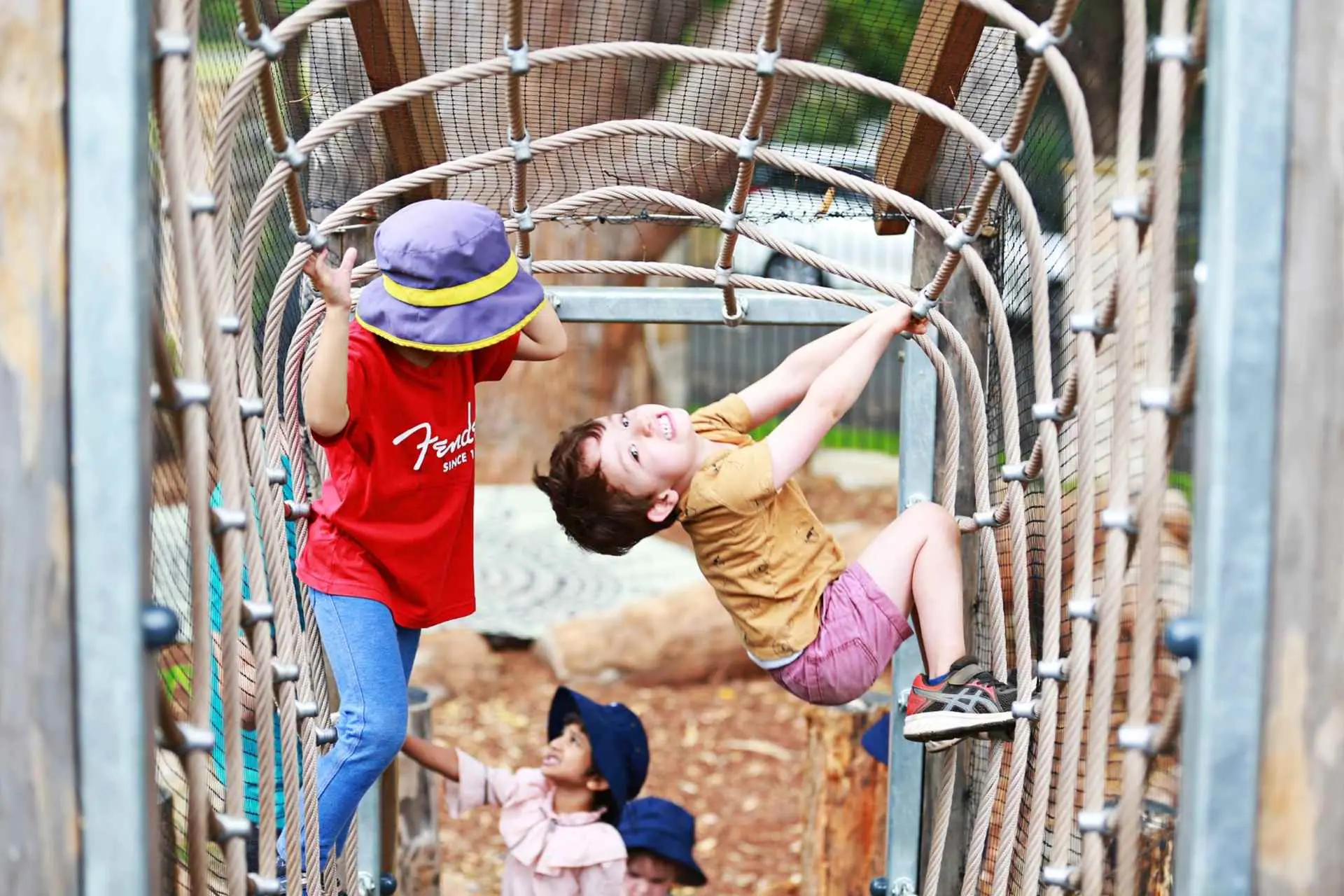
If you’re searching for early childhood education Queensland options that truly prepare your child for life, you need to understand nature play. This approach builds confident, capable kids through outdoor exploration and appropriate risk-taking. Quality early childhood education centres Queensland across the state are embracing it, and understanding this trend helps you make informed choices.
What Nature Play Actually Means
Nature play means children exploring natural environments with minimal adult direction. Think climbing logs, digging in mud, balancing on rocks. It’s child-led, messy, and incredibly valuable.
Recent Australian research confirms: imaginative play happens more frequently in natural spaces than manufactured playgrounds. When your child negotiates who gets the biggest stick, they’re building social skills that matter throughout life.
Key nature play elements:
- Natural materials only: leaves, rocks, water, sand
- Child-led exploration with open-ended possibilities
- Rich sensory experiences: different textures, smells, sounds
Why “Risky Play” Develops Capable Kids
Risky play means exciting play with uncertainty and a chance of minor injuries. This includes climbing, speed, tool use, and rough-and-tumble play.
The developmental benefits are clear:
| Skill Area | What Develops |
| Physical | Balance, coordination, strength |
| Emotional | Resilience, confidence |
| Cognitive | Risk assessment, problem-solving |
| Social | Cooperation, negotiation |
Children who engage in challenging play learn to handle stress and regulate fear. When your child attends a quality preschool Queensland program, they’re learning to assess danger and persist through challenges. That’s school readiness in action.
The Science Supporting “Dirty Play”
Flinders University research highlights: unstructured interaction with soil shapes healthy immune systems and may prevent allergic diseases.
The Queensland Kindergarten Learning Guideline recognises that multi-sensory experiences build foundations for learning. Quality early childhood education providers Queensland include daily outdoor time where children genuinely interact with natural elements.
What Quality Nature Play Looks Like
When you tour early childhood education centres Queensland area, look for:
For babies (0-18 months): Different surfaces to explore, natural objects, and educators who engage. The National Quality Standard requires outdoor spaces to support every child’s participation.
For toddlers: Quality daycare Queensland programs offer crawling opportunities, containers for sand and water, sturdy logs, and educators who encourage messy play.
For preschoolers: Quality preschool Queensland programs include climbing, child-safe tool use, gardening, and nature investigations. One provider has embedded nature play for over 30 years with bush and beach excursions.
Key takeaway: The best long day care Queensland options see outdoors as a classroom, not a break from learning.
Practical Questions for Centre Tours
When evaluating early childhood education Queensland options, ask:
- How much daily outdoor time do children get?
- What natural elements are in your outdoor space?
- How do you support children to take safe risks?
- What training has staff received about nature pedagogy?
How Educators Support Nature Play
Skilled educators observe and support children’s interests rather than directing play.
Instead of “be careful,” effective educators ask:
- How could you reach that branch?
- Where will you place your feet next?
Quality centres conduct risk-benefit assessments. They preserve challenge while minimising unacceptable risks. This teaches children to manage risks themselves.
Red Flags and Green Flags
Green flags: Children outdoors in various weather, mud and water available, educators engaged, children happily messy.
Red flags: Outdoor time cancelled for light rain, children told “don’t get dirty,” empty outdoor spaces, no child-led exploration visible.
The Bottom Line
Nature play and appropriate risk-taking aren’t trendy extras in early childhood education Queensland services. They’re essential components of quality learning.
When children climb, dig, and explore, they build resilience, confidence, and curiosity. They learn to assess risks, solve problems, and collaborate.
As you evaluate early childhood education providers Queensland offers, look for centres that understand this. Find places where children get muddy and smile about it.
The right early childhood education Queensland program will welcome your questions about nature play. They’ll show you muddy patches with pride. They’ll explain how climbing builds confidence.
Because they know what research confirms: childhood is about discovery, challenge, and joy. Nature play delivers all three. When you understand early childhood education Queensland options that prioritise nature play, you make choices that benefit your child for life.
Ready to find a centre embracing nature play? Book tours at centres near you. Watch how children interact with outdoor spaces. Ask the questions above. Trust your instincts about what feels right for your child.