Introduction
Environmental chambers are effective in testing and control of the product quality. They reproduce the conditions of temperature, humidity, and pressure. This enables the engineers to observe the performance of products in various settings.
Such sectors as electronics, automotive, aerospace and pharmaceutical industries use such chambers in their daily life. Nonetheless, selecting an appropriate environmental chamber might be a difficult task. Models are available in large numbers with varying features, sizes and capabilities. A bad decision may result in wrong test results or a lot of wasted investment.
This is the reason why it is worthwhile to know the important factors to consider before making purchases. This guide outlines the key considerations that you need to make when choosing an environmental chamber.
Understand Your Testing Requirements
The initial one is to know what you want to be tested. You need to specify the conditions that your products have to undergo before choosing equipment. The factors are important in temperature range, level of humidity, and length of time of test.
A lot of companies begin with How to Choose an Environmental Chamber in order to know the technical needs of their test process. An opportunity to have a clear plan will assist you not to purchase equipment that is inappropriate to your application. Indicatively, electronic elements might require specific temperature cycling.
Automotive components would have to be tested on humidity. There are also some industries that need to have combined stress tests where both temperature and humidity vary simultaneously.
Once you have known your test requirements you can concentrate on the chambers that are designed to meet your test requirements. This will save time and performance will be better in the long run.
Consider Temperature and Humidity Range
The main functions of the majority of environmental chambers are temperature and humidity. The range of each chamber is set such that it has a defined range in which it can simulate. Indicatively, there are chambers that work at a temperature between -40°C and 150°C. Other people can go to temperatures of -70°C.
When your products require extreme conditions testing, then you should select a chamber that can go there. It is also necessary to control humidity. There are numerous tests that have to maintain constant humidity between 20 and 98%.
The chamber of high quality must not have major variations in these levels. The range is not as important as accuracy and stability.
It can be influenced by a minor change in temperature or humidity and test results. It is important to find out the uniformity and control system of the chamber before deciding.
Evaluate Chamber Size and Capacity
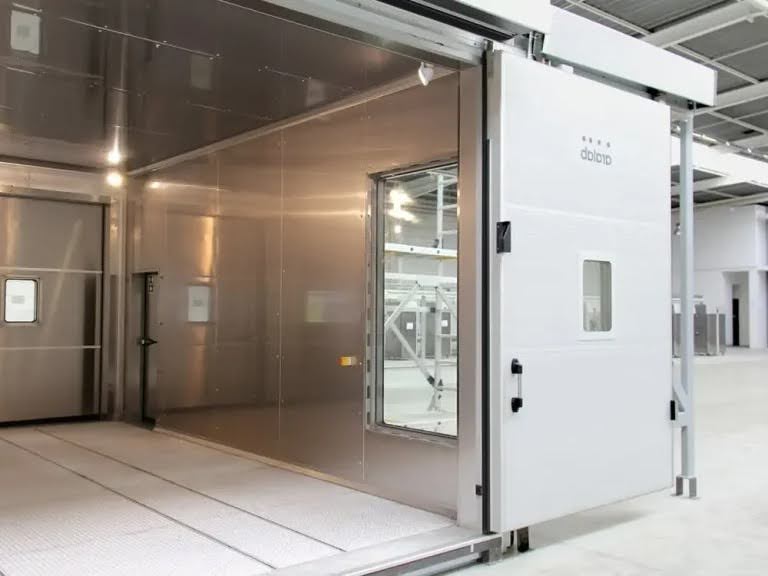
Chamber size is another factor. Environmental chambers are available in a wide variety of sizes, ranging between a small desktop chamber and a walk-in chamber. The room must be spacious enough to accommodate your samples.
It should not be too big, however. Big chambers use more energy and can diminish the effectiveness of testing. There is also airflow and space around samples that should be considered.
Proper air circulation is used to make sure that the temperature and humidity are uniform throughout the chamber. When your production will increase in the future, you might have to test a bigger batch of production.
To prevent the need to upgrade equipment in the future one may decide to choose a room with a slightly larger capacity.
Choose a Reliable Manufacturer
The specifications are not as important as the manufacturer of the chamber. A company with high quality equipment, calibration, and customer support is good.
Most laboratories also want to deal with those suppliers who are tested like Environmental test chambers manufacturer – OTS Technik due to the presence of the tested technology and reliable service.
A reputable manufacturer will also see to it that spare parts, maintenance and technical assistance will be provided to the user when necessary. Checks should also be made on certifications and quality standards.
The manufacturers who are reputable normally abide by the international testing standards and safety standards. This aids in allowing standardized and credible testing results.
Review Control Systems and Technology
State-of-the-art environmental chambers usually have sophisticated control systems. These systems permit a high level of monitoring and automation of test conditions.
An excellent chamber must have a digital control panel. This simplifies programming of test cycles as well as performance monitoring. Remote monitoring is also available in some systems using computers or a mobile device.
Another beneficial feature is the data recording. Numerous chambers will be able to contain temperature and humidity data during the test process. This assists engineers in the analysis of the findings and allows them to keep good records.
Smart control systems minimize the number of hands-on tasks and enhance accuracy of testing. They also simplify the replication of the same test conditions of need.
Consider Maintenance and Operating Costs
Environmental chambers are not short term investments. Maintenance and operating costs should also be taken into consideration besides the purchase price. The difference in energy consumption can be very high between models.
Efficient chambers also consume less power through innovative insulation and cooling mechanisms. In the long run, this may translate to huge savings. It is also important to keep it regularly maintained.
Such components as compressors, sensors, and humidity systems also need to be serviced on a regular basis. During the selection of a room, it is possible to minimize downtime by selecting one that is easily accessible during maintenance.
Other major considerations are warranty and technical support. Good support is also serious so as not to delay the testing schedule since every problem is promptly resolved.
Conclusion
The product testing and quality assurance require the use of environmental chambers. They enable producers to replicate the real world and test the performance of their products prior to their introduction to the market. The option of the chamber to be chosen must be evaluated carefully.
You have to know what you are testing, what temperature and humidity levels you should use, and which size of the chamber you should use. Another aspect that should be taken into account is the manufacturer one should work with as well as the technology employed in the control system.
Lastly, it is important to keep in mind that there are also long-term expenses that include maintenance and consumption of energy. Prior to choosing an environmental chamber, it is essential to put these factors into consideration and ensure that you have chosen a chamber that offers you accurate results, reliable performance and long term value in carrying out your tests.