Awnings are a practical and visually appealing addition to residential and commercial properties, offering shade, weather protection, and enhanced curb appeal. Designed to extend outward from a building’s exterior, awnings provide shelter over windows, doors, patios, and storefronts, reducing direct sunlight exposure and shielding areas from rain and other environmental elements. Beyond their functional advantages, awnings contribute to architectural character and aesthetic refinement, complementing both traditional and modern building designs. Whether installed for comfort, branding, or energy efficiency, awnings serve as a valuable investment that combines practicality with long-term property enhancement.
Property owners increasingly recognize the importance of outdoor living and usable exterior spaces. By installing awnings, homeowners can transform patios and decks into comfortable, shaded retreats suitable for relaxation and entertainment. Businesses benefit from improved storefront visibility, weather-protected entrances, and inviting outdoor seating areas. The versatility of awnings allows them to be customized in terms of size, material, color, and design, ensuring that each installation meets the specific needs and stylistic preferences of the property owner.
Understanding the Purpose and Function of Awnings
The primary function of awnings is to provide shade and protection from weather elements. Direct sunlight can significantly increase indoor temperatures, leading to higher cooling costs and reduced comfort during warm seasons. By blocking a substantial portion of solar heat before it reaches windows or doors, awnings help regulate indoor temperatures and improve overall energy efficiency. This natural temperature control reduces reliance on air conditioning systems and contributes to lower energy consumption.
In addition to temperature regulation, awnings protect exterior surfaces and furnishings from sun damage, fading, and deterioration. Rain protection is another key benefit, as awnings shield entryways, windows, and outdoor seating areas from moisture exposure. This protective function extends the lifespan of doors, window frames, and outdoor furniture, preserving their appearance and structural integrity over time.
Types of Awnings
Awnings are available in a variety of styles and configurations to accommodate different property requirements and design preferences.
Retractable Awnings
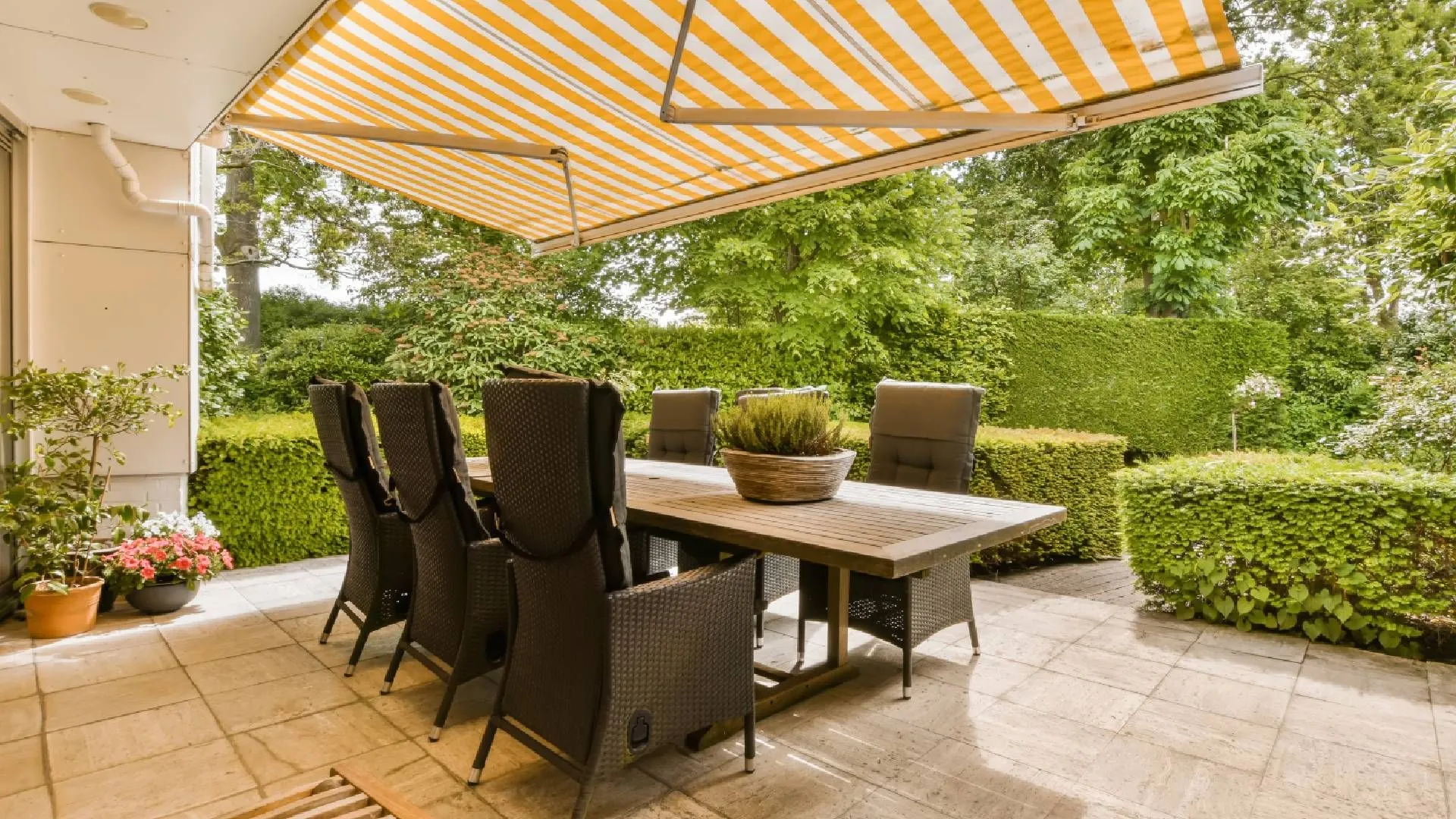
Retractable awnings offer flexibility by allowing users to extend or retract the covering as needed. These systems may be manually operated or motorized, providing convenience and adaptability to changing weather conditions. Retractable awnings are particularly popular for patios and decks, where homeowners may desire shade during sunny periods and open sky during cooler evenings.
Fixed or Stationary Awnings
Fixed awnings are permanently installed structures that provide continuous coverage. They are commonly used over windows, doors, and commercial storefronts. These awnings are durable and require minimal adjustment, making them ideal for areas that consistently benefit from shade or weather protection.
Freestanding Awnings
Freestanding awnings are independent structures that do not rely on attachment to a building. They are often used in gardens, poolside areas, or outdoor dining spaces where wall-mounted installations are not feasible. This type of awning provides versatile coverage and can be strategically positioned to maximize comfort.
Window and Door Awnings
Smaller awnings designed for windows and doors enhance both functionality and aesthetic appeal. They reduce glare, protect entryways from rain, and add decorative accents that elevate the overall architectural style of a property.
Materials Used in Awnings
The durability and performance of awnings depend significantly on the materials used in their construction. Fabric awnings are popular for their flexibility and wide range of design options. High-quality fabrics are typically treated to resist fading, mildew, and moisture, ensuring longevity and consistent appearance.
Metal awnings, often constructed from aluminum or steel, provide robust durability and resistance to harsh weather conditions. These materials are ideal for commercial applications or regions prone to heavy rainfall and strong winds. Polycarbonate and acrylic materials are also used in modern awning designs, offering lightweight strength and UV protection while maintaining a sleek appearance.
Selecting the appropriate material involves considering climate conditions, maintenance preferences, and aesthetic goals. Professional consultation ensures that the chosen material aligns with long-term performance expectations.
Benefits of Installing Awnings
Installing awnings provides a range of benefits that extend beyond shade and protection. One of the most significant advantages is improved energy efficiency. By reducing solar heat gain, awnings help maintain comfortable indoor temperatures and lower energy costs during warm months.
Enhanced curb appeal is another key benefit. Well-designed awnings complement architectural features and create a distinctive visual impact. For businesses, branded awnings serve as marketing tools, increasing visibility and attracting customers. Residential properties gain a refined and welcoming appearance that may increase overall property value.
Outdoor comfort is also significantly improved. Shaded patios and decks become functional living spaces suitable for gatherings, relaxation, and dining. By extending usable outdoor areas, awnings enhance lifestyle quality and property functionality.
Professional Installation and Maintenance
Professional installation is crucial for ensuring the structural integrity and longevity of awnings. Proper measurement, secure mounting, and alignment prevent sagging, instability, or premature wear. Experienced installers assess building materials, wind exposure, and load requirements to guarantee safe and durable placement.
Regular maintenance extends the lifespan of awnings and preserves their appearance. Fabric awnings benefit from periodic cleaning to remove dirt and debris, while metal components may require inspection for corrosion or loose fittings. Retractable systems should be maintained according to manufacturer guidelines to ensure smooth operation. Routine care ensures that awnings continue to perform effectively and retain their visual appeal over time.
Customization and Design Considerations
Awnings can be customized to reflect individual style preferences and architectural themes. Color selection plays a significant role in complementing exterior finishes and landscaping elements. Patterns and trim details add character and distinction, particularly for commercial storefronts seeking brand recognition.
Size and projection depth should be carefully planned to provide adequate coverage without obstructing natural light or visibility. Professional designers often assist in balancing functional requirements with aesthetic considerations, resulting in installations that are both practical and visually harmonious.
Long-Term Value of Awnings
The long-term value of awnings lies in their ability to enhance property comfort, efficiency, and visual appeal. Reduced energy costs, protection of interior furnishings, and extended usability of outdoor spaces contribute to measurable financial and lifestyle benefits. Additionally, the aesthetic improvement provided by well-designed awnings can positively influence property appraisal and market perception.
Businesses that invest in quality awnings often experience improved customer comfort and increased foot traffic, particularly when outdoor seating or weather-protected entrances are involved. Residential properties benefit from increased enjoyment of outdoor living spaces and enhanced architectural character.
Conclusion
Awnings represent a versatile and valuable addition to residential and commercial properties, offering shade, weather protection, energy efficiency, and aesthetic enhancement. With various styles, materials, and customization options available, awnings can be tailored to meet diverse functional and design requirements. Professional installation and proper maintenance ensure durability and long-term performance, making awnings a worthwhile investment for property owners seeking comfort and visual appeal.
By integrating practical functionality with architectural elegance, awnings transform outdoor areas into comfortable extensions of living and working spaces. Whether enhancing a home’s patio or elevating a commercial storefront, the strategic installation of awnings provides lasting benefits that combine efficiency, protection, and style.