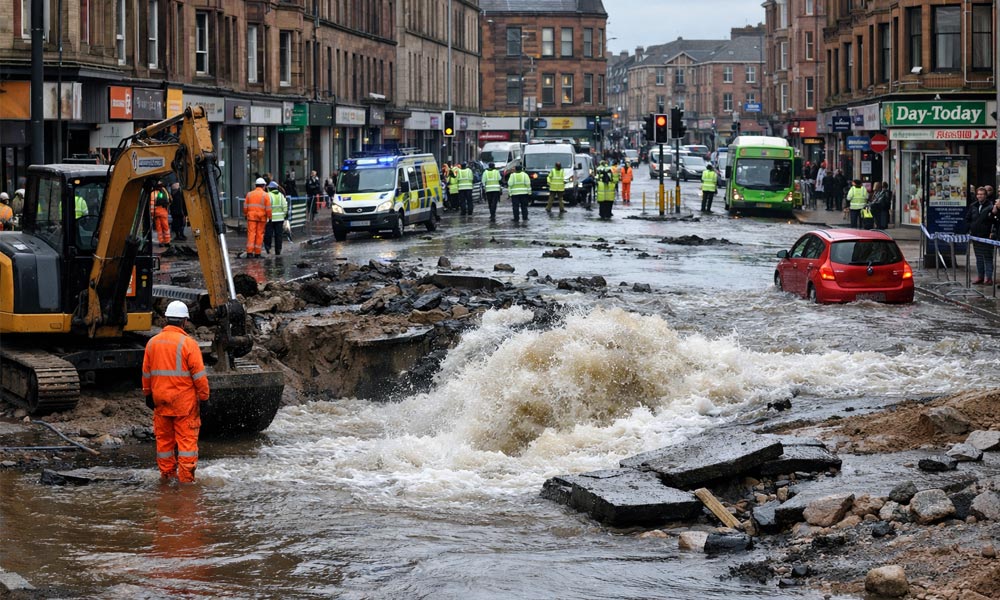
When a new day starts, most of us expect things to run in a normal way. We turn on the tap, take a shower, make tea, and get ready for work. But for people living near Shettleston Road in Glasgow, one morning turned into a big surprise. A major water pipe burst under the road, and everything changed within minutes.
The glasgow water main break shettleston road turned into a local emergency. Water rushed onto the street. Cars stopped. Homes suddenly had no water. Shops could not open. It was a moment that showed how fast a simple break under the road can affect the whole community.
In this article, we will walk step by step through what happened, why it happened, how people were affected, and what officials did to fix it. Let’s take a clear and easy look at this event so anyone can understand it.
What Happened on Shettleston Road?
The glasgow water main break shettleston road happened early in the morning, just before people started their daily routines. Some residents said they heard a loud “pop” or crack. Others woke up, looked outside, and saw water running across the road like a small river.
For anyone driving by, it was a shock. The road was flooded, and cars had to turn away. Water was pushing up through the ground with surprising force. It was not a small leak—it looked like someone had opened a fire hydrant under the street.
Moments like this show how fragile underground systems can be. A pipe we never see can break without warning and change everything around it in seconds.
Where Exactly the Glasgow Water Main Break Happened
The burst pipe was on Shettleston Road, right near the junction with Hart Street and St Mark Street. This area is busy every day. There are homes, shops, buses, and people walking to work or school. So when the pipe broke, it affected many people at once.
Water flooded the pavements and parts of the road. Drivers were confused, and some had to reverse or go down side streets to escape the water. It was the kind of scene that makes you stop and look twice because you don’t expect to see that much water in the middle of the road.
If you know the area, you know how important Shettleston Road is. It connects so many parts of the East End. A break here does not just affect one block—it touches the whole neighborhood.
Why the Glasgow Water Main Break Happened
A big question everyone asked was, “Why did this happen?” Pipes underground usually last many years, but they do wear out over time. The pipe under Shettleston Road was old, and old pipes can crack or burst without warning.
Another cause may be the weather. When the ground gets very wet from rain or very cold, it can move or push against pipes. Even a small shift can weaken the pipe and make it break.
There is also pressure inside the pipe. If many people use water at the same time, the pressure can jump. Old pipes sometimes cannot handle the extra stress. Imagine blowing up a balloon until it suddenly pops—that is similar to what can happen underground.
So the glasgow water main break shettleston road was most likely a mix of age, pressure, and the condition of the ground.
How the Burst Pipe Affected Homes and Families
One of the hardest parts of the break was how fast it affected homes. People woke up and found their taps empty. Some had no water at all. Others had water, but it was only a slow trickle.
Simple things became difficult. You could not make breakfast. You could not take a shower. You could not even flush the toilet. Families with young children struggled the most. Older people who live alone also had a hard time. Water is something we use without thinking, but when it disappears, you feel the impact right away.
Some homes did get water back after a few hours, but it was brown or cloudy. This scared many people at first. Scottish Water later explained that brown water happens when dirt and rust are pushed through the pipe after a break. It looks worrying, but it is common after an incident like this.
How Local Businesses Were Hit
Shops and small businesses along Shettleston Road also felt the impact. Many had to close their doors because they had no clean water to work with. A café cannot make drinks. A hair salon cannot wash hair. A bakery cannot clean tools. Everything stops.
For small business owners, even one lost day can mean losing money they depend on. Some tried to stay open by offering limited services, but most had no choice but to wait for water to return.
Imagine running a café on a busy morning, only to find out you cannot even wash a cup. That is what many business owners faced during the glasgow water main break shettleston road.
Traffic Problems After the Break
Traffic came to a sudden stop when the water main burst. Part of Shettleston Road had to be closed for safety. Drivers had to take detours. Buses were delayed or rerouted. Even people walking to work had to find new paths because the pavements were wet and unsafe.
Morning traffic in Glasgow is already busy, so the break made it even worse. Some people missed appointments. Others were stuck in long lines of cars, unsure of what was happening.
Road workers put up barriers and warning signs as fast as they could. Their goal was to keep everyone safe while the repair team worked.
Scottish Water’s Emergency Response
Scottish Water reacted quickly once reports came in. Their team arrived at Shettleston Road soon after the break happened. The first thing they did was shut off the valves to stop more water from flooding the street.
Then they brought in special equipment to dig into the road. They had to find the broken pipe, remove the damaged section, and replace it with a new one. This kind of work takes skill and care because one wrong move can cause even more damage.
While the team worked, Scottish Water also gave updates online to help people stay informed. They explained what happened, what to expect, and how long repairs might take. This helped calm many worried residents who were trying to understand the situation.
Water Safety and Quality After the Repair
When water came back, many people noticed that it did not look normal at first. Some homes had brown water. Some had white, cloudy water. This can be scary, but it happens often after a burst pipe.
Brown water means dirt and rust got stirred up inside the pipes. White water usually means tiny air bubbles are trapped inside. Both clear up after some time.
Scottish Water told residents to run their cold tap slowly until the water became clear. They also warned people not to use washing machines or dishwashers until the water fully settled. This helped prevent damage to appliances.
What Residents Should Do During a Water Main Break
When a pipe bursts, it can feel stressful. But there are simple steps that help you stay safe and calm. The first thing is to check your taps. If the water is brown or cloudy, do not use it. Let the cold tap run slowly until it clears. This helps move old water out of the pipes.
If you have no water at all, it is a good idea to keep bottled water at home for moments like this. Even two or three bottles can make a big difference. If you do not have bottled water, boiling water for one minute also helps make it safe for drinking or cooking.
It is also smart to stay updated. Scottish Water posts updates on their website and social pages. If you live near Shettleston Road, watching these updates can tell you when repairs are almost done. These simple steps help you handle moments like the glasgow water main break shettleston road with less stress.
How Long Repairs Usually Take on Shettleston Road
Many people wonder, “Why does fixing a pipe take so long?” The truth is, repairing a burst pipe is not a simple job. First, workers must stop the water. Then they must dig into the road, reach the broken pipe, and carefully remove the damaged part.
After that, they place a new pipe in the ground and connect it to the rest of the system. This must be done slowly and safely so the pipe does not leak again. Only after the pipe is fixed can the team fill the hole, repair the road surface, and reopen the street.
In most cases, water is back within 24 to 36 hours. But fixing the road can take longer—sometimes two or three days. Weather, traffic, or deep damage can slow things down. Still, the team always works as fast as they can because they know the whole community is waiting.
Past Water Main Breaks in Glasgow
The glasgow water main break shettleston road is not the first event of its kind. Glasgow has seen many breaks over the years, especially in areas with very old pipes. Some pipes were put in more than 100 years ago. Back then, no one expected the pipes to still be used today.
In 2013, a break on Old Shettleston Road caused a full day of water loss in the G32 area. In 2014, a cold snap caused several pipes to burst in one day across the city. Another major break in 2023 at Milngavie affected almost 250,000 homes. These past events show that Glasgow’s water system has been under pressure for a long time.
The Shettleston area has had repeat issues too. A burst in January 2025 closed nearby roads. Then came the event on Shettleston Road in May. Seeing these events together makes it clear that upgrades are needed to keep the system strong for the future.
Long-Term Fixes for Glasgow’s Water System
Scottish Water knows that these breaks cannot continue forever. That is why they are working on long-term improvements. One major plan is to replace old cast-iron pipes with stronger and more flexible materials. These new pipes bend instead of breaking when the ground shifts.
They are also using smart tools that listen for tiny leaks underground. These tools can catch problems early, long before the pipe bursts. Pressure control systems are being added too, which help keep the water flowing smoothly inside the pipes.
Upgrading a whole city’s water system takes time and money, but it is an important step. These plans aim to prevent future problems like the glasgow water main break shettleston road and make the water system stronger for everyone.
How the Community Responded
Even during stressful moments, communities often show their best side. That is exactly what happened here. Neighbors checked on older residents to make sure they had enough water. Some people shared bottled water with others who could not leave their homes. Small acts like these make the whole neighborhood feel connected.
Local shops that stayed open offered help too. Some allowed people to fill bottles at their sinks once water pressure returned. Others posted updates on community pages to keep everyone informed.
Moments like this remind us that even when something goes wrong, people can still come together with kindness. The glasgow water main break shettleston road became more than just a burst pipe—it became a moment where the community showed support, patience, and care.
What the Glasgow Water Main Break Shettleston Road Means for the Future
This event is more than just a story from one morning. It is a warning and a lesson. It shows that many parts of Glasgow’s water system need upgrades. It shows that old pipes cannot always handle today’s weather and pressure. And it shows that fast emergency response is important, but long-term solutions matter even more.
Climate changes also add new challenges. Heavier rain, sudden cold snaps, and shifting soil can all stress old pipes. This means the city needs stronger systems that can handle the new conditions of 2026 and beyond.
But there is also good news. With new technology, better planning, and continued upgrades, the future can be safer. Events like the glasgow water main break shettleston road push the city to improve, invest, and prepare. And in the end, these improvements help everyone.
Conclusion
The water main break on Shettleston Road was a major event for the East End of Glasgow. It brought flooding, traffic delays, and water loss to many homes and businesses. But it also brought fast response from workers, strong support from the community, and important lessons for the future.
While the break caused stress and trouble, it also showed how well people can work together when something unexpected happens. And as Glasgow continues to update its water system, events like this will hopefully become less common. For now, the most important thing is that repairs were made, water was restored, and the community remained strong through it all.
(FAQs)
What caused the Glasgow water main break on Shettleston Road?
The break was mainly caused by an old pipe under the road. Many pipes in Glasgow are more than 100 years old, and they weaken over time. Cold weather, heavy traffic, and sudden pressure changes in the water system can also make an old pipe crack or burst. In this case, it was likely a mix of age, pressure, and ground movement.
How long were people without water after the pipe burst?
Most people in the G31 and G32 areas had low water pressure or no water at all for several hours. Some homes had water back on the same day, but others had to wait until repairs were finished. Water came back slowly, and in some homes it returned with brown or cloudy water before clearing up.
Is the water safe to drink after a water main break?
Yes, the water is safe after repairs, but it may look strange at first. Brown water means rust and dirt were pushed through the pipes. White, cloudy water means tiny air bubbles are trapped in the water. Scottish Water advises running your cold tap until the water looks clear again before using it for drinking or cooking.
Why did the break cause so much flooding on Shettleston Road?
A water main carries a very large amount of water at high pressure. When one bursts, water shoots out quickly and can fill the road in minutes. Since Shettleston Road is a busy and low-lying area, the water spread fast, covering pavements and blocking traffic.
Why were so many shops and cafés forced to close?
Businesses need clean water to stay open. A café cannot make drinks. A hair salon cannot wash hair. A bakery cannot clean tools. Without water, these services must stop. Many shops near the glasgow water main break shettleston road lost customers and income during the outage.
How did Scottish Water fix the burst pipe?
Scottish Water shut off valves to stop the flooding. Then they dug into the road to reach the damaged pipe. They removed the broken part and replaced it with a new section. After that, they tested the line to make sure it was safe. Finally, they refilled the ground and repaired the road surface.
Could this water main break happen again?
Yes, it is possible. Glasgow has many old pipes that need upgrades. Shettleston Road has had several bursts in past years. Until more pipes are replaced with modern materials, breaks may still happen during cold weather, heavy rain, or sudden pressure changes.
What should residents do during a future water main break?
Residents should avoid using cloudy or brown water. Use bottled or boiled water until the water runs clear. Do not use washing machines or dishwashers until the system settles. Keep an eye on Scottish Water updates and report any new leaks or strange water flow.
Why do pipe breaks happen more often in winter?
Cold weather makes the ground freeze and expand. When it warms up, the ground shrinks again. This push-and-pull movement puts pressure on underground pipes. Older pipes, especially cast-iron ones, crack easier during these freeze-thaw cycles.
What is Glasgow doing to prevent more water main breaks?
Scottish Water is replacing old pipes across the city with stronger, more flexible materials. They are also adding smart leak-detection tools and better pressure control systems. These upgrades take time, but they help lower the chances of another large break like the glasgow water main break shettleston road.
Read next: Pravi Celer: A Friendly Guide to Its Taste, Uses, and Nutrition