Large Language Models (LLMs) and Artificial Intelligence are built on high-quality datasets. Whether you’re creating a chatbot, training a recommendation system, or building a computer vision model, the type of data you use will directly influence its performance and reliability.
AI developers work with different types of datasets at various stages of project development (from training and fine-tuning to evaluation and benchmarking). Understanding these dataset types helps developers pick the right data for their projects and build more accurate models.
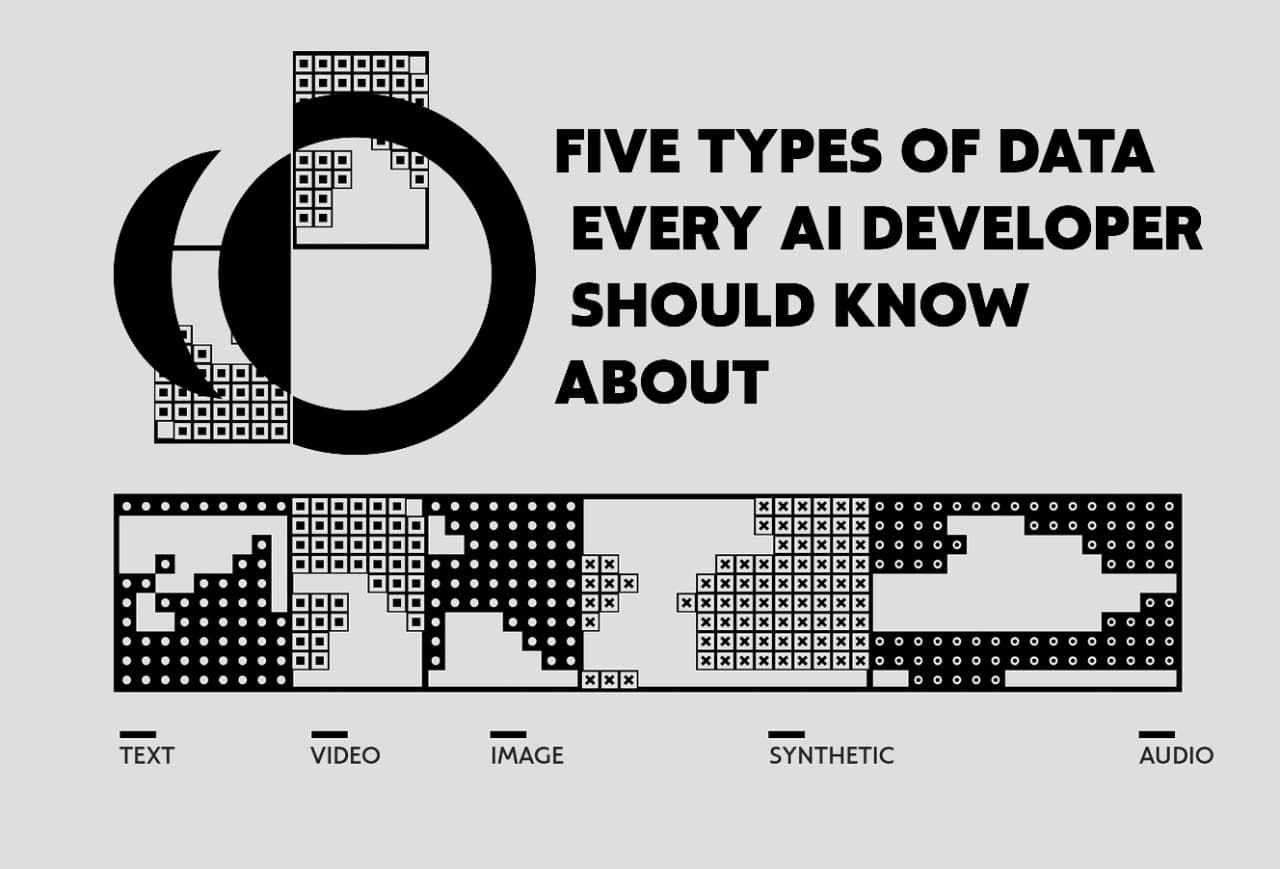
This article covers five major categories of data that every AI developer should know about, and how they’re used in modern AI and machine learning workflows.
- AI Training Data
AI training data is the foundation of any machine learning or AI system. These are the datasets that models learn from, picking up patterns, relationships, and the ability to make predictions.
Depending on the application, training data can come in the form of text, images, audio, or structured data. For example, image datasets for computer vision models, text datasets for natural language processing (NLP), or transaction data for predictive analytics.
Common applications that rely on AI training datasets include recommendation systems, fraud detection, language translation, and automated decision-making.
Developers looking for curated datasets for their AI and machine learning projects can explore available collections here:
https://www.opendatabay.com/data/ai-ml
Here’s the edited version:
- LLM Datasets
LLM datasets are specifically designed for training and fine-tuning large language models. These datasets typically consist of large volumes of structured or semi-structured text that help models understand and generate language.
Common use cases include chatbots and conversational AI, document summarisation, question-answering systems, and Retrieval-Augmented Generation (RAG) pipelines.
As an example, when an LLM is trained on domain-specific text (like healthcare, finance, or legal content), it becomes much more accurate and context-aware for specialised applications.
LLM datasets usually contain dialogue transcripts, question-and-answer pairs, technical documentation, and other structured text material.
- Synthetic Datasets
Synthetic datasets are artificially generated data designed to mimic real-world patterns without containing any actual sensitive or private information. With privacy concerns and regulatory demands growing, these datasets are becoming increasingly popular in AI development.
Synthetic data is mostly used in situations where real data is difficult to obtain or can’t be shared due to privacy restrictions. This is especially relevant in healthcare, where synthetically generated patient records allow developers to train models without ever touching real patient data. It’s also big in the PII space, where synthetic datasets can replicate personally identifiable information patterns without exposing anyone’s actual details.
Another growing area is virtual worlds, where data is generated inside virtual sandboxes to simulate multiple scenarios. This lets developers test and train models across a wide range of conditions that would be difficult or impossible to replicate with real-world data alone.
Other typical use cases include testing AI models at scale, training models without exposing sensitive data, replicating rare or edge-case situations, and generating additional training data for underrepresented cases.
Developers interested in experimenting with synthetic datasets can explore examples here:
https://www.opendatabay.com/data/synthetic
- Labelled Data
Labelled datasets are a crucial part of supervised machine learning. In these datasets, each data point comes with a tag or annotation that tells the model what the correct output should be.
For example, images labelled with objects for computer vision models, text labelled with sentiment for sentiment analysis, or audio clips labelled with spoken words for speech recognition.
Labelled data is especially important for tasks like classification, object detection, and entity recognition. The accuracy of the labels directly affects how well the model performs, which is why high-quality annotation is one of the most valuable elements of any machine learning dataset.
Creating labelled data for AI projects is often expensive and time-consuming, so curated datasets with precise annotations are in high demand among developers and usually cost premium.
- Benchmarking Data
Benchmarking datasets are used to compare and assess AI model performance. These datasets provide standardised tasks that let researchers and developers measure where their models are improving and where they’re falling short.
Typical use cases include testing model accuracy and robustness, comparing different algorithms or architectures, and evaluating fine-tuned models against a baseline.
For example, a developer building a natural language model might run it against a benchmarking dataset to see how well it handles question-answering or text summarisation.
Benchmarking datasets are essential in research and development because they provide a common standard for measuring and comparing models across the board.
Choosing the Right Dataset for Your AI Project
Different types of datasets serve different purposes across the AI lifecycle, and in most cases developers will use a combination of several. For example, training data might be paired with labelled datasets for supervised learning, and then benchmarking datasets can be used afterwards to test how well the model actually performs.
When choosing datasets, developers should consider factors like data quality and accuracy, relevance to the intended application, dataset size and diversity, and licensing and usage rights.
Modern AI development is built on data. Understanding the different types (AI training data, LLM datasets, synthetic data, labelled data, and benchmarking data) helps developers build better models and create more advanced AI systems. Getting the right combination of datasets helps ensure that AI models are reliable and deliver meaningful results in real-world scenarios.