Introduction
In the high-speed world of modern food and beverage manufacturing, micro-leaks are among the most lethal profit killers. A compromised container does not merely result in localized waste; it invites oxidation, causes premature spoilage, and triggers devastating product recalls that can cripple a brand overnight. Precision seaming technology stands as the ultimate line of defense in maintaining absolute product integrity.
The Hidden Costs of Defective Seams in Mass Production
When a high-speed production line operates without strict dimensional tolerances, minor mechanical drift can ruin thousands of containers before manual inspections catch the flaw. This breakdown in hermetic sealing allows air and moisture to infiltrate, paving the way for bacterial contamination and catastrophic spoilage.
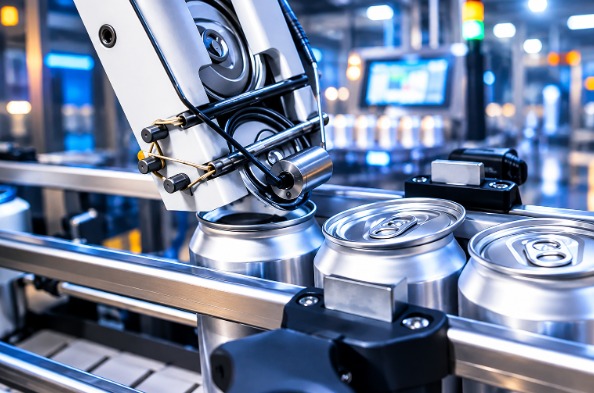
In high-speed canning environments, a misaligned roller or a worn chuck can generate thousands of defective cans before the issue is detected by manual spot checks. This micro-leakage not only leads to catastrophic spoilage but also poses severe food safety risks. To mitigate this vulnerability at the source, production managers must rely on a highly calibrated levapack that ensures strict dimensional tolerances and consistent hermetic seals across every single batch.
Anatomy of a Perfect Double Seam
Understanding the Five Essential Metrics
Evaluating the structural soundness of a can requires measuring microscopic dimensions with absolute accuracy. Quality control teams rely on five critical metrics during teardown analysis:
- Countersink Depth: The depth of the chuck wall relative to the top of the double seam, ensuring proper vertical alignment.
- Seam Thickness: The total outside width of the finished double seam, verifying proper roller pressure.
- Seam Length: The vertical height of the double seam, indicating correct mechanical interlock.
- Body Hook: The downward curl of the container body flange locked within the seam.
- Cover Hook: The upward curl of the lid edge that engages with the body hook to form the primary seal.
Common Seam Defects and Their Root Causes
Even minor deviations in tooling can result in critical structural failures. Identifying these anomalies quickly prevents widespread batch rejection:
- Droop: A localized protrusion of the seam extending below the normal bottom edge, typically caused by worn second-operation rolls.
- Vee: A localized sharp downward extension of the seam resembling a V-shape, usually indicating excessive roll pressure.
- False Seam: A critical failure where the body hook and cover hook fail to interlock properly, creating an unsealed gap.
Moving from Reactive to Preventive Quality Control
Relying solely on destructive manual teardowns leaves a window of vulnerability between sample intervals. Modern facilities are rapidly transitioning to proactive, non-destructive monitoring systems.
- Automated Vision Inspection: High-speed cameras capture 360-degree profiles of finished seams instantly.
- X-Ray Seam Analysis: Advanced sensors inspect internal overlaps without opening the container.
- Real-Time Data Logging: Integrated software tracks dimensional trends, alerting operators before tolerances drift out of specification.
The ROI of Upgrading to Servo-Driven Seaming Technology
Traditional mechanical cam seamers rely on rigid linkages that wear down over time, leading to inconsistent seam formation. Modern servo-driven seamers eliminate these mechanical limitations by offering programmable, independent control over every seaming roller.
Upgrading seaming hardware represents a fraction of the cost compared to a wide-scale product recall. Beyond the immediate loss of inventory, brands face devastating reputational damage and severe regulatory fines. According to comprehensive guidelines on food safety modernization and hazard prevention, implementing rigorous, automated quality control at the primary packaging stage is the most financially sound strategy to ensure strict compliance and protect consumer health.
Conclusion: Safeguarding Brand Integrity
Quality control is not an isolated inspection step; it is deeply embedded in the physical precision of the packaging machinery itself. By investing in high-accuracy seaming technology and advanced monitoring systems, food and beverage manufacturers protect their bottom line, eliminate costly waste, and safeguard their long-term brand reputation.