Most people use the terms eye exam and vision check interchangeably. They are not the same thing, and the difference between them is not a minor technicality. It determines whether serious eye conditions get caught before they cause permanent damage or go undetected until vision loss has already occurred. If you are trying to decide which one you need, understanding what each actually involves makes that decision straightforward.
Here are eight differences that most people do not know about until it is too late to matter.
- A Routine Vision Check Tests Clarity. A Comprehensive Exam Tests Health.
This is the fundamental distinction that everything else flows from. A routine vision check, the kind offered at schools, pharmacies, and driver’s license renewals, tests one thing: how clearly you can see at a standard distance. It tells you whether your vision is within a normal range and whether you might benefit from corrective lenses. It tells you nothing about the health of your eyes.
A comprehensive eye exam evaluates both vision and the clinical health of the entire visual system. It assesses the internal structures of the eye, the pressure inside the eye, the health of the retina and optic nerve, and how the eyes function together as a system. The vision clarity component is one part of a much larger clinical evaluation rather than the whole of it.
- Only a Comprehensive Exam Measures Intraocular Pressure
Intraocular pressure is the primary screening tool for glaucoma, the leading cause of irreversible blindness worldwide. Elevated pressure inside the eye damages the optic nerve gradually and without pain or noticeable symptoms until significant vision loss has already occurred. By the time a person notices peripheral vision loss from glaucoma, the condition has typically progressed well beyond its early and most treatable stage.
Tonometry, the test that measures intraocular pressure, takes seconds and is entirely painless. It is a standard component of a comprehensive eye exam and is completely absent from a routine vision check. If you have never had your intraocular pressure measured, you have never been screened for glaucoma regardless of how many vision checks you have had.
- A Comprehensive Exam Includes Dilation. A Routine Check Does Not.
Dilation uses drops to widen the pupil, giving the provider a clear, unobstructed view of the retina, optic nerve, macula, and retinal blood vessels at the back of the eye. This is where the most clinically significant conditions are visible and where the most important health information from an eye exam is gathered.
Retinal tears and detachments, early macular degeneration, diabetic retinopathy, and optic nerve changes associated with glaucoma are all evaluated through dilated examination. Without dilation, the provider is working with a significantly limited view that cannot reliably detect these conditions in their early stages. A routine vision check never includes dilation, which means it never provides this level of clinical information regardless of how thoroughly the vision testing component is conducted.
- Only a Comprehensive Exam Can Detect Diabetic Eye Disease
Diabetic retinopathy affects the blood vessels of the retina and is the leading cause of new blindness in working-age adults. The early changes that indicate developing retinopathy are visible on a dilated retinal exam before they produce any symptoms or affect how clearly a person sees. This window of detectability before symptom onset is exactly where treatment is most effective and where early intervention can prevent progression to vision-threatening stages.
A routine vision check cannot detect diabetic retinopathy. It does not include the retinal examination that makes detection possible. For anyone with diabetes or pre-diabetes, relying on routine vision checks rather than comprehensive exams with dilation means the most important monitoring their condition requires is simply not happening.
Pearle Vision provides comprehensive eye exam near me appointments conducted by licensed optometrists that include the full clinical evaluation diabetic patients and anyone with elevated eye disease risk actually needs, going well beyond what a routine vision check delivers.
- A Comprehensive Exam Evaluates How Your Eyes Work Together
Binocular vision, the ability of both eyes to work together as a coordinated system, is assessed during a comprehensive exam through a series of tests that evaluate eye teaming, tracking, and convergence. Weaknesses in any of these functions are associated with reading difficulties, headaches, eye strain during screen use, and difficulty with depth perception that most people attribute to other causes without ever connecting them to how their eyes function together.
A routine vision check tests each eye independently for clarity but does not evaluate how the eyes work as a system. Someone with a binocular vision problem who receives routine vision checks may go years with their glasses or contacts prescription updated regularly while the underlying coordination issue that is causing their symptoms goes completely unaddressed.
- Only a Comprehensive Exam Assesses the Health of the Anterior Segment
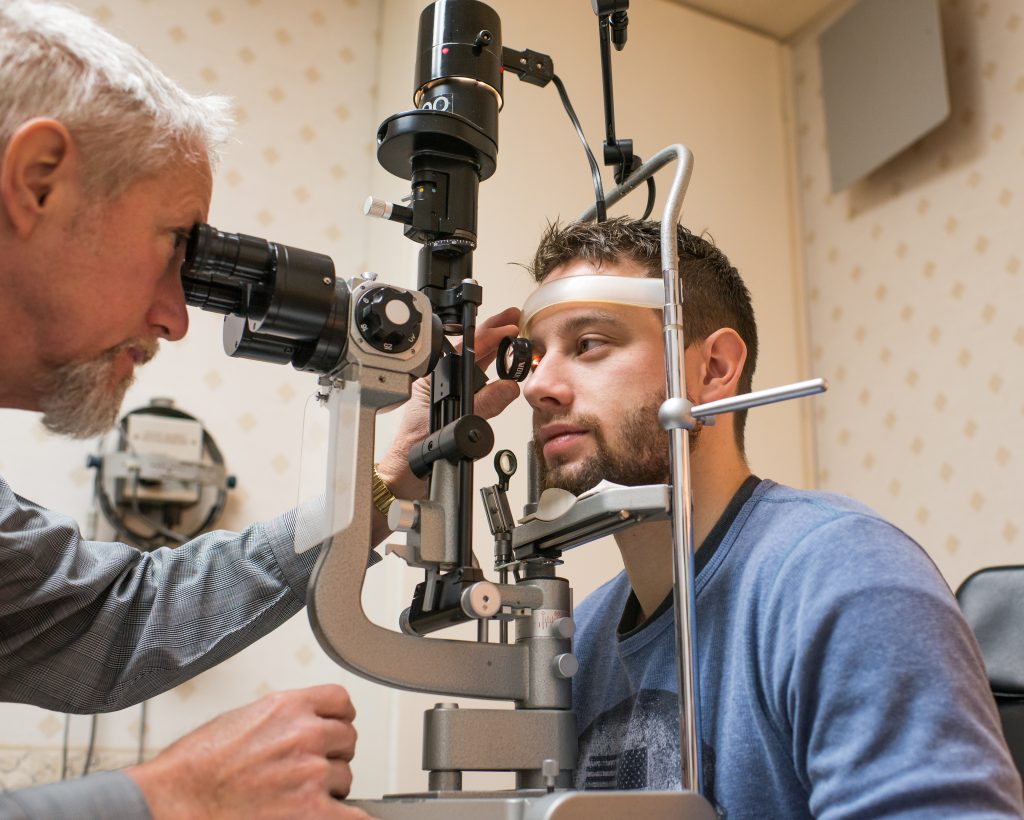
The anterior segment of the eye includes the cornea, lens, iris, and anterior chamber, the structures at the front of the eye that are critical for vision and overall eye health. A slit-lamp examination, which is a standard component of a comprehensive eye exam, evaluates these structures in detail using a specialized microscope that allows the provider to detect conditions including cataracts, corneal disease, dry eye disease, and signs of uveitis or other inflammatory conditions.
A routine vision check does not include slit-lamp examination. Early cataracts, corneal irregularities, and anterior chamber conditions that are clearly visible under slit-lamp evaluation are not assessed. For conditions like cataracts that develop gradually and are best managed with awareness of their progression over time, not having a baseline evaluation and regular monitoring means changes go untracked until they have significantly affected vision.
- A Comprehensive Exam Can Detect Systemic Health Conditions
The eye is the only place in the body where blood vessels can be observed directly without invasive procedures, which makes a comprehensive retinal examination a window into systemic health that has nothing to do with vision. Hypertension produces characteristic changes in the retinal blood vessels that a comprehensive exam can detect. Diabetes, autoimmune conditions, thyroid disease, and certain neurological conditions all have ocular manifestations visible on comprehensive examination.
In some cases, a comprehensive eye exam has been the first point of detection for a systemic condition the patient was not aware they had. This diagnostic dimension is entirely absent from a routine vision check, which focuses exclusively on visual acuity and never examines the internal eye structures where these systemic signs appear.
- The Decision Between the Two Is Usually Straightforward Once You Know What Each Does
If you’ve ever pondered, “I’m trying to decide if I should get comprehensive eye exam or just routine one,” the answer for most adults is a comprehensive exam. A routine vision check is appropriate for situations where the only question is whether your distance vision has changed and no health monitoring is needed, which describes a narrower set of circumstances than most people assume.
If you are over forty, have any systemic health condition, have a family history of eye disease, have not had a dilated exam before, or simply want to know that your eye health is being properly monitored rather than just your prescription, a comprehensive exam is what your situation calls for. The additional time it requires is modest. The clinical information it provides compared to a routine check is not.