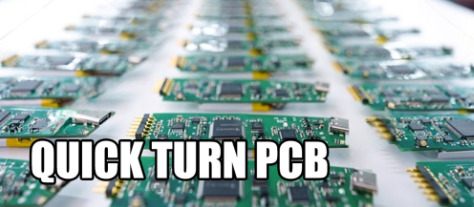
In electronics development, waiting for a prototype PCB can delay testing, engineering reviews, and the next design revision. When a team needs physical boards quickly, quick-turn fabrication can shorten the gap between completing a design and receiving a manufactured PCB.
However, “quick turn” does not mean that every PCB can be fabricated in 48 hours. A simple two-layer board and a complex HDI design involve very different manufacturing processes. Layer count, materials, quantity, surface finish, impedance requirements, and other specifications can all influence the final production schedule.
For buyers, understanding what determines PCB turnaround time is essential. Instead of choosing a supplier based only on the shortest advertised lead time, it is better to understand how board complexity affects realistic manufacturing schedules.
Why PCB Lead Time Varies
PCB fabrication involves multiple manufacturing stages. Depending on the board design, these can include material preparation, imaging, copper processing, lamination, drilling, plating, surface finishing, electrical testing, inspection, and final preparation.
A simple PCB may move through these stages relatively quickly. A multilayer or HDI board, however, can require additional lamination cycles, more complex drilling, tighter registration, and specialized manufacturing processes.
This is why PCB suppliers typically provide different lead times for different board categories.
For example, a supplier may offer a 48-hour turnaround for certain simple multilayer prototypes while requiring several additional days for more complex constructions.
What Determines PCB Turnaround Time?
Several factors can influence how long it takes to fabricate a PCB. Buyers should consider all of them when requesting a manufacturing quote.
Layer Count
Layer count is one of the most obvious factors affecting fabrication time.
Two- and four-layer boards generally require fewer manufacturing steps than six-, eight-, ten-, or twelve-layer boards. As layer count increases, manufacturers must manage additional copper layers, lamination processes, registration requirements, and other production considerations.
FastTurnPCB states approximate prototype lead times of:
| PCB Complexity | Approximate Lead Time |
| 2–4 layers | 48 hours |
| 6–8 layers | 3 days |
| 10–12 layers | 5 days |
| HDI | About 10 days |
These timelines demonstrate an important point: quick-turn PCB fabrication is relative to the complexity of the board. A 48-hour option may be realistic for certain 2–4 layer designs, but it should not be assumed for every PCB.
HDI Construction
High-Density Interconnect (HDI) boards can require significantly more manufacturing work than conventional multilayer boards.
HDI designs may use microvias, sequential build-up structures, fine routing, and additional fabrication cycles. These processes require tighter control and can increase production time.
FastTurnPCB indicates an approximate 10-day lead time for HDI projects, depending on the specific design and requirements.
For buyers, this is a useful reminder that selecting HDI technology should be based on the electrical and physical requirements of the product rather than expecting the same turnaround as a standard two- or four-layer PCB.
Material Selection
PCB material can also influence manufacturing time.
Standard materials may be readily available and easier to process, while specialized materials can require additional sourcing or manufacturing considerations. Material thickness, copper weight, dielectric properties, and thermal characteristics may all affect the fabrication process.
If a project requires a specific material, buyers should communicate this requirement early. Waiting until the production stage to confirm material availability can introduce avoidable delays.
PCB Quantity
The number of boards required can affect production scheduling as well.
A small prototype quantity may be easier to fit into a quick-turn production schedule, while larger quantities can require additional manufacturing capacity and processing time.
Buyers should provide the exact quantity when requesting a lead-time estimate. A supplier’s prototype turnaround may not automatically apply to larger production orders.
Surface Finish
Surface finish is another manufacturing consideration that can affect the production schedule.
Different finishes have different processing requirements and may have different material availability. Common options include HASL, ENIG, and other specialized finishes.
The appropriate finish should be selected according to the application’s requirements, but buyers should also confirm that the requested finish is available within their desired timeline.
Impedance Requirements
Controlled-impedance boards require careful coordination between the design, material selection, stack-up, and manufacturing process.
The fabricator may need to review trace geometry, dielectric thickness, copper characteristics, and other stack-up parameters to meet the required impedance target.
FastTurnPCB states an impedance tolerance of ±5%. While controlled impedance can be supported within a quick-turn workflow, buyers should provide these specifications before production rather than treating them as an afterthought.
Design Complexity and DFM
The design itself can have a significant effect on turnaround time.
Dense routing, small clearances, unusual board geometries, complex via structures, and other manufacturing challenges can require additional engineering review.
This is why Design for Manufacturing (DFM) should be completed before production begins. DFM can identify potential fabrication problems and give engineers an opportunity to correct them before manufacturing.
A supplier that provides DFM support can help reduce the risk of discovering a manufacturability problem after production has already started.
Why 48 Hours Does Not Apply to Every PCB
The phrase “48-hour PCB fabrication” can sound attractive, but it needs context.
A 48-hour turnaround may be achievable for certain 2–4 layer boards that use readily available materials and straightforward manufacturing requirements. It does not mean that a 12-layer board, specialized-material PCB, or HDI design can automatically be produced within the same timeframe.
This distinction is important when comparing suppliers. Buyers should ask for a lead time based on their actual board specifications, including layer count, dimensions, quantity, material, surface finish, impedance requirements, and any special construction features.
A realistic manufacturing schedule is more useful than an unrealistic promise that cannot be maintained once the complete design is reviewed.
Fast Fabrication Requires Planning
Quick-turn manufacturing works best when the design package is ready before production begins.
Buyers should provide complete Gerber files, drill files, stack-up information, material requirements, impedance specifications, and other relevant manufacturing data. Clear documentation allows the fabricator to review the project and identify potential issues sooner.
DFM can also be performed before manufacturing so that design concerns can be resolved without disrupting the production schedule.
In other words, quick turnaround depends not only on the manufacturer’s production capacity but also on how prepared the project is when the order is submitted.
Comparing Suppliers by Realistic Lead Time
When comparing PCB manufacturers, buyers should avoid looking at a single headline number.
Instead, ask suppliers to provide estimated lead times for the specific board being manufactured. A useful comparison should consider:
- Number of PCB layers
- HDI or conventional construction
- Required materials
- Board quantity
- Surface finish
- Copper requirements
- Controlled impedance
- Special drilling or via structures
- DFM requirements
- Expected production and inspection stages
This creates a more accurate picture of how quickly each manufacturer can actually deliver the required boards.
Planning Prototype Development Around Fabrication
Lead time should be included in the engineering development schedule from the beginning.
Suppose an engineer expects to complete a design on Monday and needs physical boards for testing. A simple 2–4 layer board with a 48-hour fabrication timeline may be available much sooner than a more complex 10–12 layer board requiring approximately five days.
If the design uses HDI construction, an approximate ten-day fabrication period may need to be considered.
Planning around these realistic timelines allows engineering teams to schedule testing, design reviews, and subsequent revisions more effectively.
Faster Fabrication Can Improve the Development Cycle
The real value of quick-turn fabrication is not simply receiving a PCB quickly. It is the ability to reduce the waiting period between design decisions and physical testing.
When engineers receive boards sooner, they can evaluate electrical performance, mechanical fit, routing decisions, and other aspects of the design earlier. If changes are required, the next revision can enter fabrication without unnecessarily extending the project schedule.
However, this advantage only works when the manufacturing timeline is realistic and the PCB is fabricated according to the required specifications.
Assembly Comes Later
Quick-turn PCB fabrication focuses on producing the bare circuit board. Once the fabricated PCB has been received and verified, assembly can be considered as a separate next step if a functional prototype is required.
Keeping these stages separate also makes it easier to evaluate the fabrication lead time itself. The primary question is how quickly the manufacturer can produce a compliant bare PCB based on the design requirements.
Final Thoughts
Quick-turn PCB fabrication can help electronics teams reduce development delays, but buyers should understand that turnaround time depends heavily on board complexity.
Two- and four-layer boards may be suitable for approximately 48-hour fabrication under appropriate conditions, while six- to eight-layer boards can require around three days and ten- to twelve-layer boards around five days. HDI designs can require approximately ten days because of their more complex construction.
Layer count, materials, quantity, surface finish, impedance requirements, HDI structures, and DFM considerations should all be evaluated before a production schedule is promised.
The best approach is not to ask whether a manufacturer can “make any PCB in 48 hours.” Instead, buyers should ask for a realistic lead time based on the exact technical requirements of their board.
Fast Turn PCB offers PCB fabrication with DFM support and stated lead times of approximately 48 hours for 2–4 layer boards, 3 days for 6–8 layers, 5 days for 10–12 layers, and about 10 days for HDI projects, depending on project specifications.