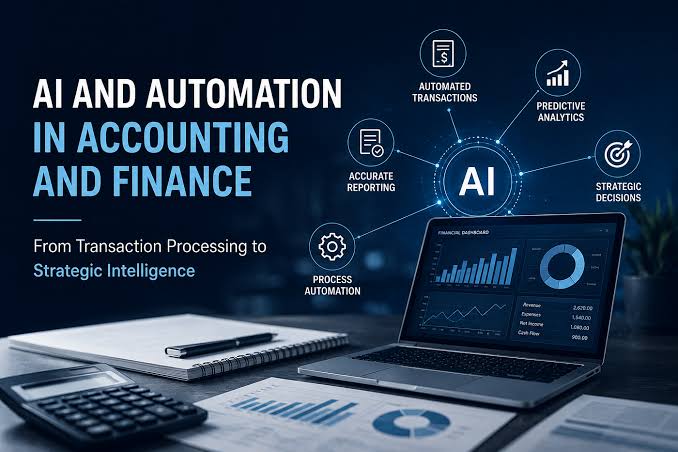
The financial world is changing faster than most people realize. Automation isn’t some far-off concept anymore, reserved for tech giants and sprawling manufacturing operations. It has quietly but firmly planted itself at the heart of accounting and finance, reshaping how professionals manage money, analyze data, and serve their clients. Whether someone is running a small business or overseeing a large investment portfolio, understanding this shift is becoming less optional and more essential.
How Automation Is Transforming Day-to-Day Accounting Tasks
For decades, accountants poured enormous amounts of time into repetitive, manual work: data entry, invoice processing, bank reconciliation, and everything in between. Today, automated software handles many of those same functions in seconds, with a level of accuracy that dramatically cuts down on human error. Platforms powered by artificial intelligence can categorize transactions, flag anomalies, and produce detailed financial reports without anyone ever touching the keyboard. That frees up accounting professionals to focus on genuinely higher-value work, like strategic planning, tax optimization, and client advisory services. The shift isn’t eliminating jobs so much as it’s elevating them into something far more meaningful.
The Impact on Financial Reporting and Compliance
Regulatory compliance has always been one of the most demanding corners of financial management. Keeping pace with shifting tax codes, evolving reporting standards, and audit requirements demands constant attention and real precision. Automated systems now monitor regulatory updates in real time and adjust reporting workflows on the fly, making it considerably easier for businesses to stay compliant without burning through excessive resources. When navigating complex regulatory environments and delivering timely reports, a financial advisor in Denver, Colorado increasingly leans on these tools to maintain accuracy and efficiency at scale. Automation also produces cleaner audit trails, which can prove invaluable during tax season or any external review.
Automation and the Rise of Real-Time Financial Insights
One of the most compelling advantages automation brings to finance is immediate access to real-time data. Traditionally, businesses had to wait days, sometimes even weeks, for financial reports to be compiled before they could make informed decisions. Now, automated dashboards pull live data from multiple sources at once, giving business owners and finance teams an up-to-the-minute view of cash flow, expenses, and revenue. That kind of immediacy empowers faster, more confident decision-making at every level of an organization. For investors and wealth managers especially, real-time insights are quickly becoming a competitive necessity rather than a nice-to-have luxury.
Artificial Intelligence and Predictive Financial Analysis
Beyond automating routine tasks, artificial intelligence is pushing finance squarely into the territory of predictive analytics. Machine learning algorithms can sift through vast datasets to identify emerging trends, forecast cash flow patterns, and even flag potential investment risks before they snowball into serious problems. These tools help finance professionals shift from a reactive posture to a proactive one, anticipating challenges and opportunities rather than simply scrambling to respond to them. As AI models grow more sophisticated, their capacity to deliver personalized financial guidance will only deepen. That evolution carries particular weight in wealth management, where tailored, thoughtful advice sits at the core of every strong client relationship.
What This Means for Finance Professionals and Their Clients
The rise of automation doesn’t diminish the value of human expertise in finance. If anything, it sharpens it. When routine tasks are handled automatically, professionals can invest more energy into understanding client goals, crafting smart financial strategies, and delivering the kind of nuanced advice that no algorithm can fully replicate. Clients, in turn, benefit from faster service, fewer errors, and more personalized attention throughout the process. The most effective finance professionals today aren’t threatened by these tools; they’re using them as partners, amplifying their own knowledge and capabilities in ways that simply weren’t possible before.
Conclusion
Automation isn’t a disruption to accounting and finance so much as it is a natural evolution. The professionals and businesses that lean into these changes are finding themselves better positioned to serve clients, manage risk, and operate efficiently within an increasingly complex financial landscape. Rather than replacing the human touch, automation creates space for it to flourish exactly where it matters most. As technology continues to advance, staying informed and genuinely open to these tools will remain one of the most valuable habits any financial professional can build. The future of finance isn’t automated or human. It’s both, working in step with each other.