A growing number of Orlando businesses are rethinking what a meaningful community investment actually looks like. Sponsoring a one-off event or writing a check to a general fund still has its place, but increasingly, local companies are choosing a more durable kind of impact: putting their name and resources behind science education that directly shapes the region’s future workforce. STEM sponsorship Orlando has quietly become one of the more strategic moves available to businesses that want their community involvement to mean something measurable.
This shift is not happening by accident. As Central Florida’s economy continues to diversify into technology, healthcare, aerospace, and advanced manufacturing, the businesses driving that growth are realizing they have a direct stake in how well-prepared the next generation of workers actually is.
The Business Case for STEM Investment
It is easy to frame corporate giving purely in terms of goodwill, but the calculus behind STEM sponsorship runs deeper than reputation management. Companies that sponsor science education programs are, in effect, investing in their own future talent pipeline. A regional workforce that is comfortable with data, technology, and problem-solving is a direct asset to the businesses that will eventually hire from that pool.
There is also a clear marketing and visibility advantage. Corporate education partnerships Florida businesses pursue tend to generate sustained, positive brand association, particularly when the sponsorship is tied to a respected, mission-driven institution rather than a short-term promotional event. Parents and community members notice which companies are showing up consistently for education, and that recognition compounds over time in ways a single ad campaign cannot replicate.
What CSR Decision-Makers Are Looking For
Conversations with corporate social responsibility teams across the region tend to surface the same priorities when evaluating a potential education partner:
- Measurable reach, particularly into underserved schools and communities
- Transparent reporting on how sponsorship dollars translate into program hours, student reach, or scholarship access
- Brand alignment with innovation, curiosity, and forward-thinking values
- Opportunities for employee engagement, such as volunteer days or family events tied to the sponsorship
- A track record of community trust built over years, not months
This is precisely the gap that established science centers are positioned to fill. Unlike a newly formed nonprofit still building its operating history, a long-running science center brings decades of credibility, an existing relationship with local schools, and infrastructure already built to absorb and deploy sponsorship dollars efficiently.
A Regional Model Worth Studying
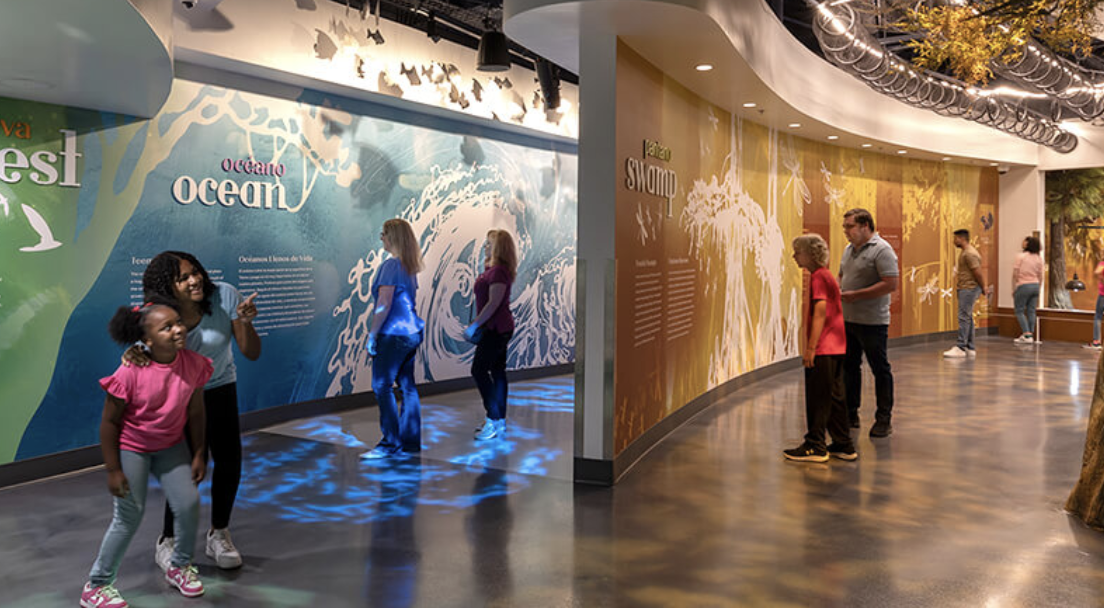
The Center for Discovery Orlando has become a recognizable example of how this kind of partnership plays out in practice. Through outreach programs that bring hands-on STEM workshops directly into underserved communities at no cost to participants, the organization gives sponsoring businesses a way to fund tangible, trackable outcomes rather than abstract goodwill. Programs reaching students in low-income neighborhoods through afterschool and community center sessions illustrate exactly the kind of measurable community STEM investment Orlando businesses say they want to see.
Companies considering this type of partnership often start by exploring the school programs Orlando offered to local classrooms, since these programs make the direct connection between sponsorship dollars and in-classroom impact easy to see and easy to communicate to employees, customers, and shareholders alike.
Beyond the Sponsorship Check
The most effective corporate-education partnerships rarely stop at funding. Businesses that get the most reputational and cultural return tend to also encourage employee volunteering, sponsor family-oriented events, or provide in-kind support such as venue access, transportation, or executive mentorship. This layered involvement signals to the community that the commitment is genuine rather than transactional, and it gives employees a tangible way to feel connected to the company’s values.
A Strategic, Not Sentimental, Decision
None of this is to suggest that supporting science education is purely a sentimental gesture dressed up in business language. For Orlando companies competing for talent in a tightening labor market, an early, visible investment in the STEM pipeline is a long-horizon strategy. The students benefiting from a sponsored program today are the engineers, technicians, and analysts a local business may be recruiting in a decade.
As more Central Florida companies look for ways to differentiate their community involvement, science education partnerships offer something rare: a sponsorship model where the business benefit, the community benefit, and the long-term economic benefit all point in the same direction.