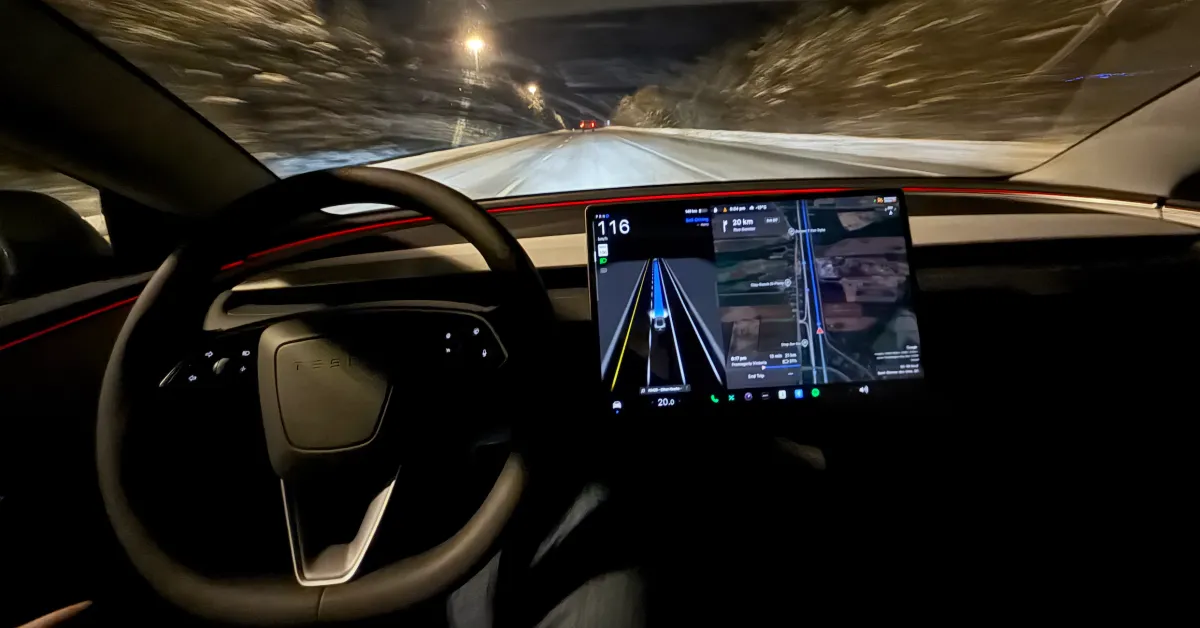
Tesla continues to make waves in the automotive world, particularly with its bold strides in autonomous driving technology. The company has always been at the forefront of innovation, and with the launch of its Full Self-Driving (FSD) mode, Tesla is not just leading the way—it’s reshaping the future of transportation. As the company refines and expands its FSD features, according to AutoNotion Tesla drivers and the automotive industry as a whole are closely watching what could be a groundbreaking leap toward a more automated and convenient driving experience.
The Evolution of Tesla’s Autopilot and Full Self-Driving Features
Tesla’s journey into autonomous driving began years ago with its Autopilot system, which initially offered limited assistance in highway driving. Over time, this feature evolved, adding capabilities such as automatic lane changes, adaptive cruise control, and autopark. However, the company’s ultimate goal has always been the development of Full Self-Driving mode, a fully autonomous system that can handle a broader range of driving tasks with little to no input from the driver.
Tesla’s Full Self-Driving system is not just a continuation of Autopilot; it’s a major step forward. With each software update, Tesla has been adding new functionalities that push the envelope in terms of what autonomous vehicles can do. The system is now capable of navigating through city streets, responding to traffic signals, stop signs, and even navigating roundabouts—all with minimal assistance from the driver. While Tesla’s Full Self-Driving mode still requires drivers to remain alert and ready to take control at any moment, the promise of a truly autonomous vehicle is closer than ever.
A New Era in Convenience and Safety
One of the most exciting aspects of Full Self-Driving technology is the potential for increased convenience and safety on the road. With the system handling more and more aspects of driving, Tesla owners can expect a driving experience that requires less manual input and allows for more focus on other tasks, such as enjoying the ride or handling other responsibilities.
In terms of safety, Tesla’s Full Self-Driving mode has the potential to significantly reduce human error, which is a leading cause of accidents. Tesla vehicles equipped with FSD are constantly monitoring their surroundings, making decisions based on real-time data and advanced machine learning algorithms. In theory, this ability to respond to a range of scenarios more quickly and accurately than a human driver could lead to fewer accidents and a safer driving environment for all road users.
Tesla’s FSD system is also equipped with a suite of sensors and cameras that provide 360-degree visibility. This gives the vehicle an enhanced awareness of its environment, allowing it to react to pedestrians, cyclists, and other vehicles with greater precision. While Tesla vehicles are not yet fully autonomous, the data collected from the fleet of cars on the road is constantly used to improve the system, making the cars smarter and safer with every update.
Tesla’s Full Self-Driving Mode: The Latest Features
Tesla’s Full Self-Driving system is a constantly evolving platform, with software updates being rolled out to enhance its functionality. Some of the features currently available or in testing include:
- Navigate on Autopilot: This feature enables the vehicle to navigate highways and interchanges autonomously, choosing the best route and adjusting speed based on traffic conditions.
- Auto Lane Change: Tesla vehicles can automatically change lanes on the highway, using the vehicle’s sensors to ensure safe and smooth transitions.
- Autopark: This feature allows the vehicle to park itself in both parallel and perpendicular spaces, making parking easier and more convenient.
- Summon: Tesla’s Summon feature allows drivers to move their car forward or backward from a parking space using the Tesla app, making tight parking spots less of an issue.
- Traffic Light and Stop Sign Control: One of the most anticipated features, FSD is now capable of recognizing traffic lights and stop signs, stopping at red lights and starting up again when it’s safe to do so.
Although the Full Self-Driving system is not yet perfect, the frequent software updates and the continuous learning from Tesla’s vast fleet of vehicles are paving the way for improvements. Tesla drivers are encouraged to report any issues or concerns with the system, allowing the company to refine the technology further and make it safer for everyone on the road.
A Step Toward the Future: Challenges and Opportunities
While Tesla’s Full Self-Driving mode is undoubtedly a major technological achievement, it still faces challenges that must be addressed before full autonomy can be realized. One of the key hurdles is regulatory approval. Autonomous driving technology is subject to rigorous scrutiny by government agencies, and the process for securing regulatory approval in different countries can be lengthy. Tesla’s FSD system is currently in a beta phase, and its rollout to the public is still cautious as Tesla continues to work with regulators and improve the system.
Another challenge is the technology itself. Although FSD has made impressive strides, it’s not without its limitations. The system relies on cameras and sensors to interpret its environment, which can sometimes be affected by poor weather conditions, such as heavy rain or snow. Furthermore, there are certain complex scenarios, such as construction zones or unpredictable pedestrian behavior, where the system may still need human intervention.
Despite these challenges, Tesla’s FSD technology is one of the most advanced in the world, and it represents a step toward a future where driving could become largely automated. The continued development of this system has the potential to revolutionize how we think about mobility, offering not just a more efficient and safer driving experience, but also a new level of convenience that could change the way we live.
The Road Ahead for Full Self-Driving
Looking ahead, Tesla’s Full Self-Driving mode is expected to become even more capable as the company continues to refine its algorithms and add new features. The ultimate goal is to have vehicles that can drive themselves with little to no human input—what is known as Level 5 autonomy. Achieving this level of autonomy will require solving significant technical and regulatory challenges, but Tesla is undoubtedly moving in the right direction.
As the company continues to innovate and push the boundaries of autonomous driving, other automakers will likely follow suit, accelerating the development of autonomous vehicles across the industry. While Tesla may currently be leading the charge, the future of driving will likely see a greater shift toward more autonomous vehicles, making roads safer, more efficient, and ultimately transforming how we interact with cars.
Conclusion: The Future of Driving is Here
Tesla’s Full Self-Driving mode is one of the most exciting developments in the automotive world today. With its advanced technology, increased safety features, and potential to transform the driving experience, FSD represents the future of transportation. While it may still have some kinks to work out, the progress made so far shows that Tesla is on the path to revolutionizing how we drive. As the technology continues to evolve, we can expect to see even more exciting advancements in the world of autonomous vehicles, with Tesla leading the way.